The Hydrogen Rainbow: Why Earth’s Hidden White Hydrogen Changes Everything
Hydrogen is the most abundant element in the universe — yet 95 percent of the 100 million tonnes produced annually comes from burning fossil fuels. The energy world has assigned hydrogen an entire spectrum of colors, each describing a fundamentally different production pathway with radically different carbon footprints, costs, and geopolitical implications.
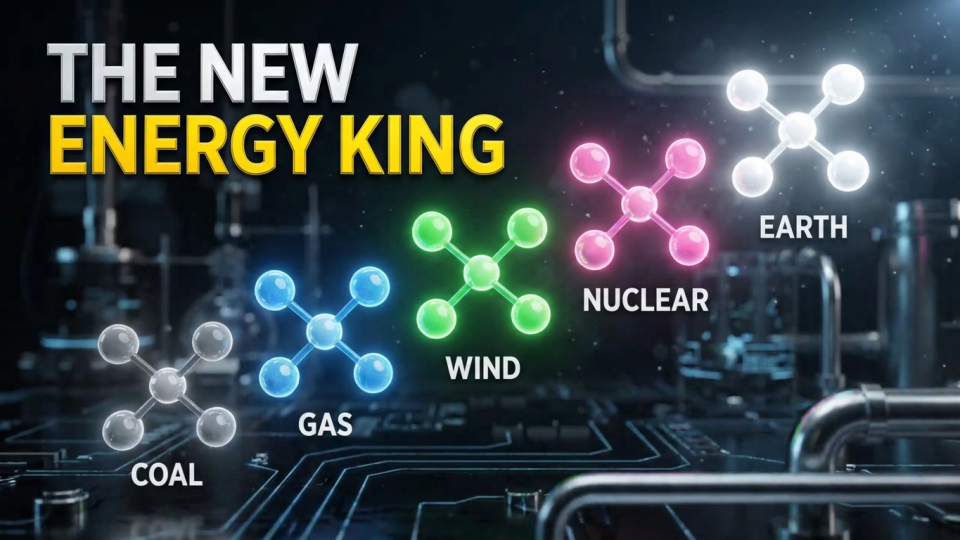
This documentary decodes every color. Gray hydrogen — produced by steam methane reforming at $1 to $2 per kilogram — dominates today but releases 9 to 12 kilograms of CO2 per kilogram of hydrogen. Blue hydrogen captures up to 90 percent of those emissions through carbon capture and storage, with Norway’s Northern Lights project already injecting CO2 into the seabed of the North Sea. Green hydrogen uses renewable-powered electrolysis to split water with zero carbon output — Europe leads with 46.9 percent of global market share, while Saudi Arabia’s NEOM project targets 237,000 tonnes annually from 4 gigawatts of renewables. Yellow hydrogen restricts electrolysis to solar power only. Pink hydrogen uses nuclear baseload electricity — France’s 56 reactors and the US Nine Mile Point plant lead deployment. Turquoise hydrogen pyrolyzes methane into hydrogen and solid carbon black through the reaction CH4 → C + 2H2, with ExxonMobil and BASF announcing a joint demonstration plant in Baytown, Texas in November 2025. White — or gold — hydrogen occurs naturally underground through serpentinization and radiolysis, with the world’s only operational site in Bourakébougou, Mali, and France’s Lorraine basin potentially holding 260 million tonnes.
By 2050, the Hydrogen Council projects hydrogen could meet 18 percent of global final energy demand, prevent 6 gigatonnes of CO2 annually, and support 30 million jobs. Global investment could surpass $300 billion by 2030. The color that powers your country by 2040 will depend entirely on your geology, your renewables, and your political will.
