Paper Title: Air quality index forecasting under seasonal and long-term environmental dynamics
Authors: Shivani Jain
Corresponding Author: Shivani Jain (shivani.jain@meu.edu.in)/India
Abstract
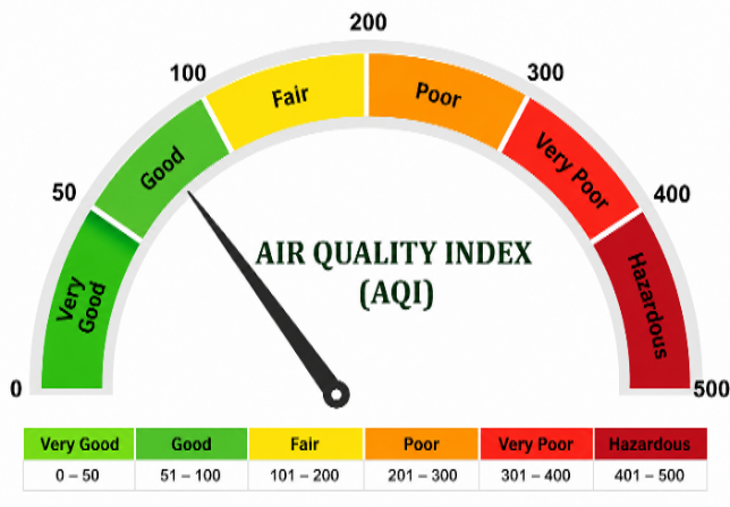
The Air Quality Index (AQI) indicates air pollution levels and their associated risks to human health and the environment. Factors influencing AQI include temperature, humidity, wind, precipitation, air pressure, seasonal variations, changes in industrial and urbanization patterns, and major pollutants such as PM2.5, PM10, NO2, SO2, CO, and O3. This paper discusses AQI geography and timing, as well as the relationship between air pollution and climate systems. It gives special attention to seasonal fluctuations and regional differences in pollution, dispersion, radiative forcing, short-lived climate pollutants, deforestation, and urbanization. The study also addresses seasonal and long-term environmental variations that affect pollutant levels and AQI. The study recognizes the importance of AQI forecasting for pollution assessment, public information, health protection, resource allocation, enforcement, location ranking, trend analysis, and timely assessment. The assessment also highlights key challenges, including potential variation in pollutant locations, monitoring difficulties, data reliability, the lack of direct studies on air quality indexes, and limited validation for real-time applications. To develop efficient air-quality management plans and provide precise, trustworthy air-quality forecasts, it is crucial to understand these environmental and temporal factors.
