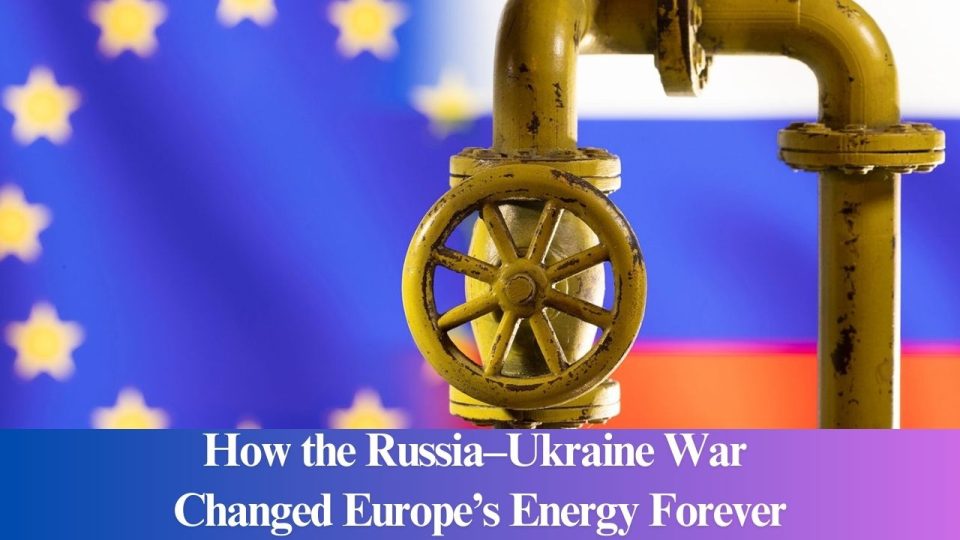
How the Russia-Ukraine War Changed Europe’s Energy Forever
The Russia-Ukraine war dramatically reshaped the European Union’s (EU) energy generation landscape, forcing a rapid reconfiguration of its supply chains, policies, and long-term strategies. Prior to the conflict, the EU relied heavily on Russian natural gas, which accounted for around 40% of its imports. The war and subsequent sanctions led to a sharp decline in natural gas deliveries, pushing Europe to diversify supplies through liquefied natural gas (LNG) imports from the United States, Qatar, and Norway, alongside accelerated investments in storage capacity and interconnections. In response to the crisis, many EU countries temporarily revived coal-fired power plants and reopened coal mines, despite climate commitments, to ensure energy security and avoid blackouts during winters. At the same time, the war reinvigorated discussions around nuclear power. Nations like France, Poland, and Finland expanded nuclear energy plans, while Germany, which had been phasing out reactors, reconsidered temporary extensions. The crisis also accelerated the EU’s transition toward renewable energy, with wind, solar, and hydropower projects receiving unprecedented funding and political support under initiatives such as REPowerEU. Hydrogen projects also gained momentum, with the EU aiming to become a global leader in green hydrogen production and imports from Africa and the Middle East. The overall impact of the conflict has been both disruptive and transformative. On one hand, it exposed vulnerabilities in Europe’s reliance on a single supplier; on the other, it fast-tracked the continent’s commitment to a more diversified, resilient, and sustainable energy system. While short-term measures leaned on fossil fuels, long-term strategies remain anchored in renewables, nuclear power, and hydrogen technologies, positioning the EU for a future less dependent on geopolitical risks.
