Why SpaceX Is Building the Future of Humanity
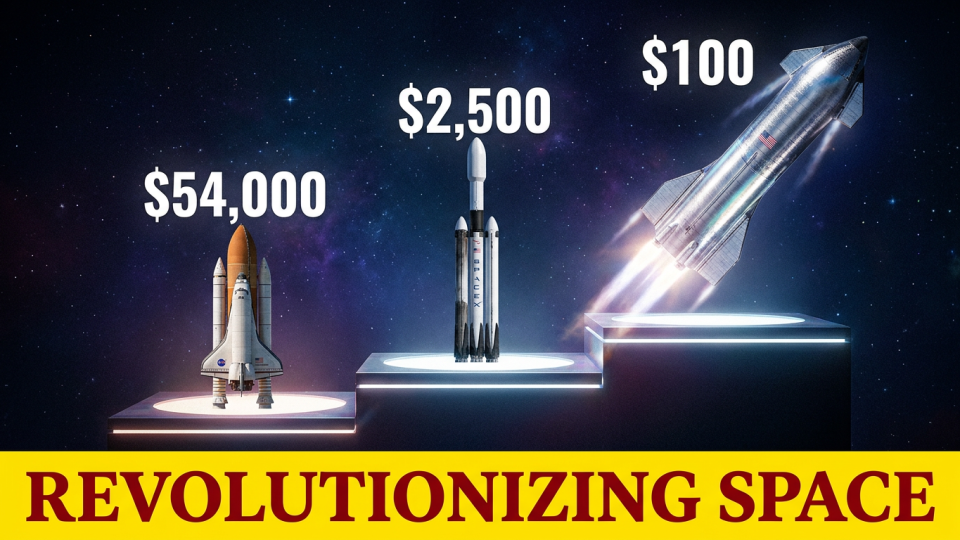
What does it take to make an entire species multiplanetary, and can one private company actually do it? Founded in 2002, SpaceX has executed one of the most extraordinary technological and commercial ascents in industrial history. In 2025 alone, the company completed 165 orbital launches, its sixth consecutive annual record, representing more than 60% of all orbital launches on Earth, while a single Falcon 9 booster demonstrated 29 reflights, permanently redefining the economics of space access. Starlink, the company’s low-Earth orbit broadband constellation, surpassed 10 million active subscribers across 160 countries as of February 2026, generating $11.4 billion in annual revenue with an EBITDA margin of 63% — nearly three times the profitability of traditional satellite operators. This documentary examines the full strategic architecture of SpaceX’s mission: how Falcon 9 reusability reduced launch costs by 90%, how Starlink’s cash flows directly finance Starship development, and how Starship Version 3 — the most powerful launch vehicle ever built, capable of lifting 150 metric tonnes to orbit — targets sub-$100 per kilogram launch costs, a 99.8% reduction from the Space Shuttle era. We analyze the company’s $1.675 trillion IPO filed with the SEC in April 2026 and the Sabatier-reaction propellant production strategy that makes a permanent Mars settlement chemically viable. The question is no longer whether SpaceX can reach Mars. The question is whether the infrastructure being built will get there in time.
