Paper Title: Green cement production technology for reducing GHG emissions from the industrial sector of Kazakhstan
Authors: Ayagoz Khamzina, Teginbolat Samuratov, Ruslan Omirgaliyev, Anuar Aldongarov, Nurkhat Zhakiyev
Corresponding Author: Nurkhat Zhakiyev (nzhakiyev@gmail.com)/ United States
Abstract
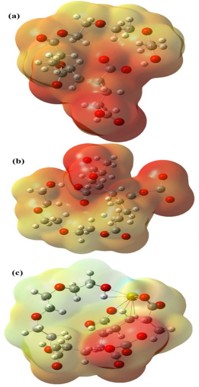
Reducing clinker and cement consumption is one of the key pathways to lowering CO₂ emissions from cement-related industrial processes. This study investigates the molecular interaction mechanism of an ester-based polycarboxylate ether (PCE) fragment with Ca²⁺ and SiO₂ as a simplified representation of PCE-assisted silica-fume systems and evaluates how such material-efficiency assumptions can be incorporated into Kazakhstan-specific greenhouse gas emission scenarios. Density functional theory calculations were performed using the B3LYP-D3/6-311++G(d,p) level of theory, followed by molecular electrostatic potential, non-covalent interaction, reduced density gradient, electron localization function, and QTAIM analyses. The results indicate that carboxylate oxygen atoms in the PCE fragment act as the main coordination sites for Ca²⁺, while the SiO₂ model contributes additional oxygen-containing interaction sites. The ternary PCE–Ca²⁺–SiO₂ system shows a more connected interaction network than the isolated PCE and PCE–SiO₂ systems, supporting the plausibility of Ca²⁺-mediated adsorption and dispersion in silica-rich cementitious environments. In parallel, greenhouse gas emissions from Kazakhstan’s Industrial Processes and Product Use sector were assessed under three scenarios: without measures, with current measures, and with additional measures. The additional-measures scenario incorporates material-efficiency assumptions related to optimized use of PCE–silica fume, clinker reduction, and process improvements. The results should be interpreted as a molecularly informed scenario framework. The study contributes to the discussion of green cement production technologies and industrial decarbonization pathways in Kazakhstan.
