Using Claude to Design a Hydrogen Electrolyzer Control System
The world is betting $250 billion on green hydrogen by 2035. The DOE target: produce it at $1 per kilogram from renewable electricity. The bottleneck is not the electrolyzer hardware. It is the control system that keeps it running efficiently when solar and wind power fluctuate by 40 percent in minutes. Every fluctuation in renewable input stresses the membrane, degrades efficiency, and increases the cost of every kilogram produced.
In 2025, I used Claude to design a complete adaptive control system for a 10-megawatt PEM electrolyzer. I loaded ISO 22734, IEC 61511, and the full operating specifications into Claude’s 200,000-token context window simultaneously. Then I wrote a precise engineering prompt asking for a model-predictive control algorithm with ISO 22734 current ramp rate constraints, PID tuning parameters with Ziegler-Nichols rationale, and a complete SciPy Python implementation.
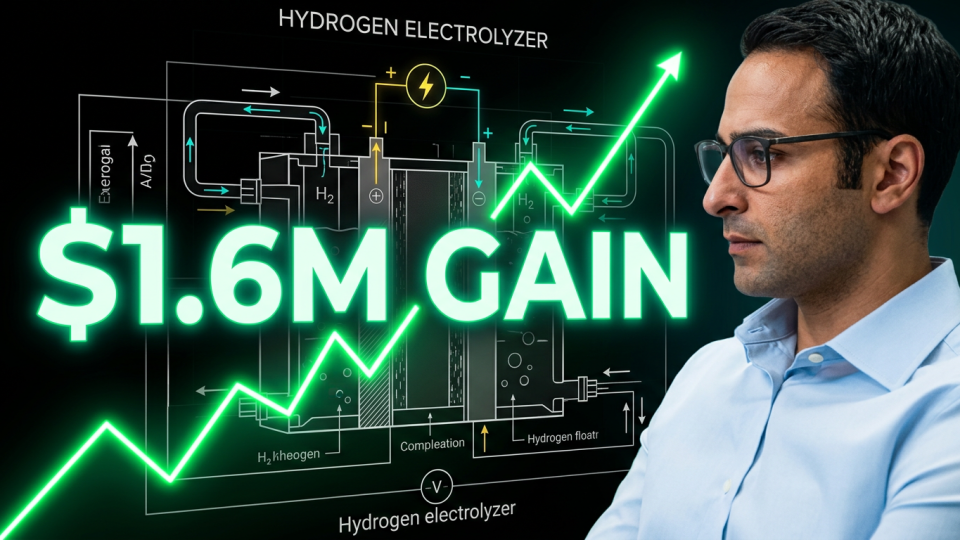
The result: optimizing current density, temperature, and pressure setpoints simultaneously improves efficiency by approximately 5 percentage points. On a 10MW electrolyzer running 8,000 hours per year, that produces 400 extra tonnes of hydrogen annually — worth $1.6 million. Adaptive control also extends membrane life by an estimated 15 percent, saving $50,000 to $200,000 in replacement costs per stack.
Claude also generated the IEC 61511 SIL 2 safety logic for hydrogen leak detection and emergency shutdown, and the IEC 60079-10-1 hazardous area zone classification for the electrolyzer room. But here is where honesty matters. Claude made two dangerous errors I had to catch: it specified a membrane rated to 50 bar for an 80 bar system — a potentially catastrophic underspecification — and it missed NFPA 2 Section 7.1.3’s requirement for 6 air changes per hour in enclosed hydrogen spaces. The engineer caught both. This is why the human is not optional.
Claude cannot sign off on a safety system. It cannot hold a professional engineering license. But it gives every engineer who uses it 10 times the analytical capacity — compressing 16 weeks of traditional control design into 3 days. Engineering 2.0 is not AI replacing engineers. It is engineers who use AI replacing engineers who don’t.
