Virtual Power Plants | How Your Home Could Soon Stabilize the National Grid
On July 29, 2025, 100,000 ordinary homes across California discharged their batteries at exactly the same moment. No power station gave the signal. A piece of software coordinated all of them in under half a second — delivering 535 megawatts to the national grid. Every homeowner got paid. This already happened.
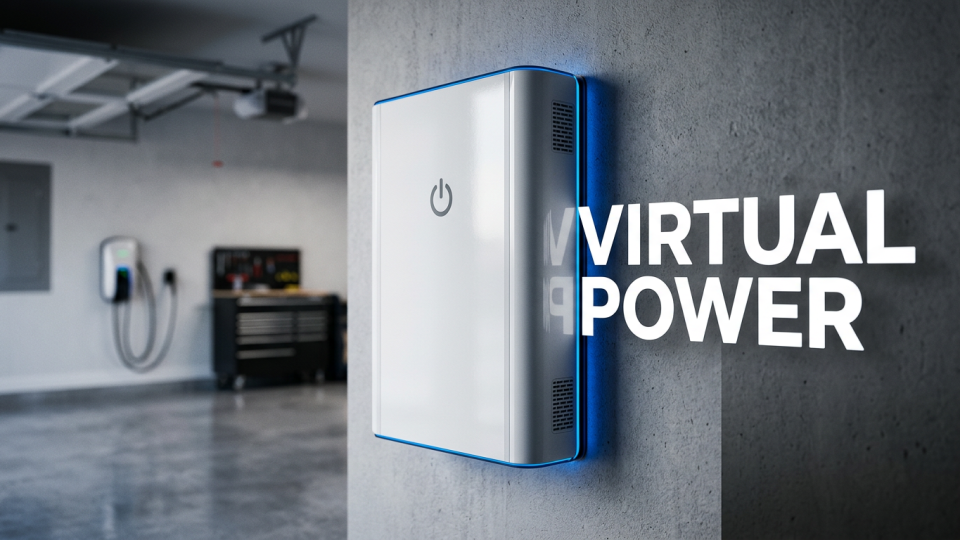
This is the Virtual Power Plant — a network of home batteries, solar panels, smart thermostats, and EV chargers connected by AI software and coordinated to act as a single electricity source. The grid doesn’t see 100,000 separate homes. It sees one very large power station.
The 100-year-old one-way grid — one big plant pushing power to millions of passive consumers — is breaking. Renewables generate electricity when the sun shines, not when people need it. The famous California Duck Curve creates a crisis window every evening between 6pm and 9pm that the old grid cannot handle alone. VPPs fill that window using assets already sitting in your garage and on your roof.
The AI brain behind a VPP predicts grid stress 4 hours ahead, coordinates 100,000 devices in under 500 milliseconds, and responds 28,000 times faster than a gas peaker plant. Arizona Public Service’s Cool Rewards program has 90,000 thermostats delivering 140 megawatts without a single homeowner noticing a 2-degree temperature adjustment.
Tesla paid $9.9 million to Powerwall owners through VPP programs in 2024 alone. A Powerwall 3 owner earns approximately $1,375 per year. During events, the rate reaches $2 per kilowatt-hour. One California homeowner documented $574.77 in a single season. VPPs now cover 33 gigawatts across 30 US states. Tesla, Sunrun, and Renew Home are building a 16-gigawatt network from millions of enrolled homes. The DOE projects VPPs supplying 10 to 20 percent of all US peak electricity demand by 2030 — replacing $17 billion of annual grid investment.
The 100-year grid is being rebuilt from the bottom up. Not by a government program. By ordinary people who decided their home should be more than just a consumer.
