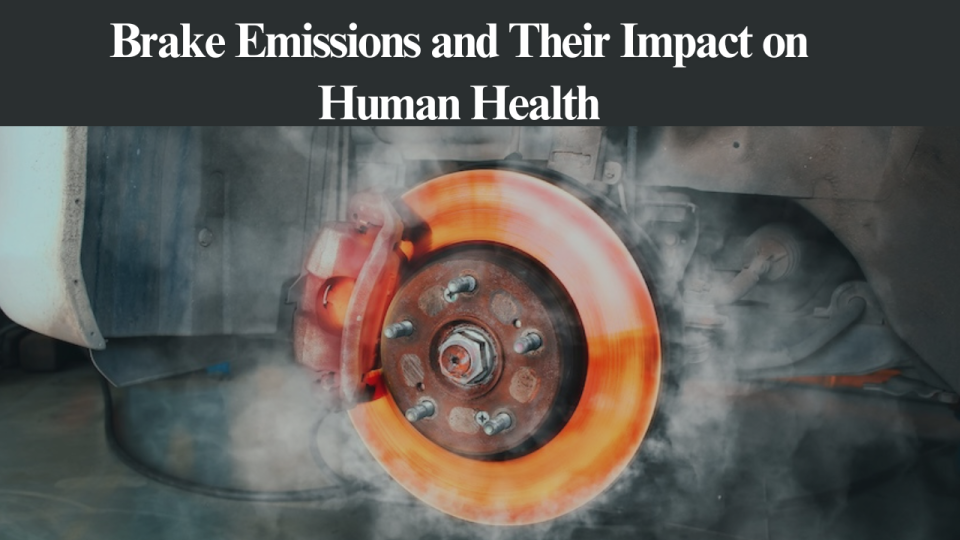
Brake Emissions and Their Impact on Human Health
Brake emissions have become one of the most significant sources of non-exhaust pollution from cars and trucks as vehicle manufacturers have successfully reduced tailpipe emissions. Generated from friction between brake pads and rotors, these emissions release large quantities of particulate matter—including PM10, PM2.5, and ultrafine particles—that are invisible to the naked eye yet highly dangerous. The particles contain metals such as copper, iron, zinc, and antimony, as well as organic compounds and ceramic fragments. Because brakes operate close to ground level, these particles are released directly into the air people breathe, particularly in densely populated urban areas with heavy stop-and-go traffic. Brake-emitted particles pose serious human health risks. Their small size allows them to penetrate deep into the lungs and enter the bloodstream, contributing to oxidative stress, systemic inflammation, asthma, cardiovascular disease, and increased mortality risk. The metallic composition of the particles makes them especially toxic, as iron and copper can trigger harmful chemical reactions within cells. The environmental effects are also concerning because metals from brake dust accumulate in soil and waterways, harming aquatic organisms and disrupting ecosystems. Efforts to reduce brake emissions include the use of regenerative braking in hybrid and electric vehicles, which significantly reduces reliance on friction brakes. Advances in brake pad materials—such as copper-free formulations, ceramic pads, and organic composites—also decrease toxic particle generation. Coated brake discs and emerging brake dust capture devices offer additional methods of controlling emissions. Urban traffic management, improved public transportation, and smoother driving habits can further reduce brake wear. While challenges remain, particularly regarding cost and uneven technology adoption, brake emissions must be addressed as a major air-quality issue. Reducing these invisible pollutants is essential for protecting human health and creating cleaner, more sustainable transportation systems.
