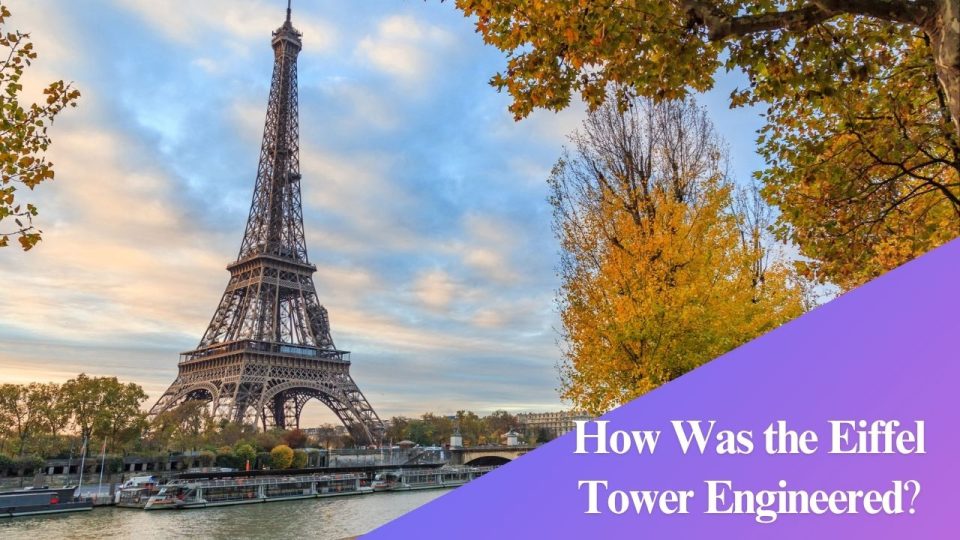
How Was the Eiffel Tower Engineered?
The Eiffel Tower, constructed for the 1889 World’s Fair in Paris, stands as a symbol of engineering brilliance and French innovation. Designed by Gustave Eiffel and his team, the iron lattice tower was conceived as a bold statement of industrial progress during the rise of metal construction in the 19th century. Standing 300 meters tall upon completion, it was the tallest man-made structure in the world until 1930. Built from 18,038 pre-fabricated wrought iron parts joined by 2.5 million rivets, the tower was assembled in just over two years by a workforce of about 300 people, using advanced safety measures for the time. Though initially controversial and dismissed as an eyesore by many artists and intellectuals, the Eiffel Tower quickly gained popularity. It was originally intended to stand for only 20 years, but its use as a radio and later television transmission tower ensured its survival. Financially, the tower cost around 7.8 million gold francs, largely funded by Eiffel himself, who recouped his investment through ticket sales and concessions. The Eiffel Tower’s engineering accounted for wind resistance and thermal expansion, making it remarkably stable. Its open truss design allows wind to pass through, reducing stress. Maintenance is continuous and includes repainting the structure every seven years, which requires roughly 60 tons of paint and takes over a year to complete. Elevators and lighting systems have been modernized over time, and sustainable technologies such as solar panels and LED lights have been introduced. Today, the Eiffel Tower attracts millions of visitors annually and serves as both a tourist destination and a cultural icon. It exemplifies the successful transformation of industrial utility into artistic and national heritage. The tower remains a lasting symbol of France’s commitment to engineering, innovation, and architectural excellence.
