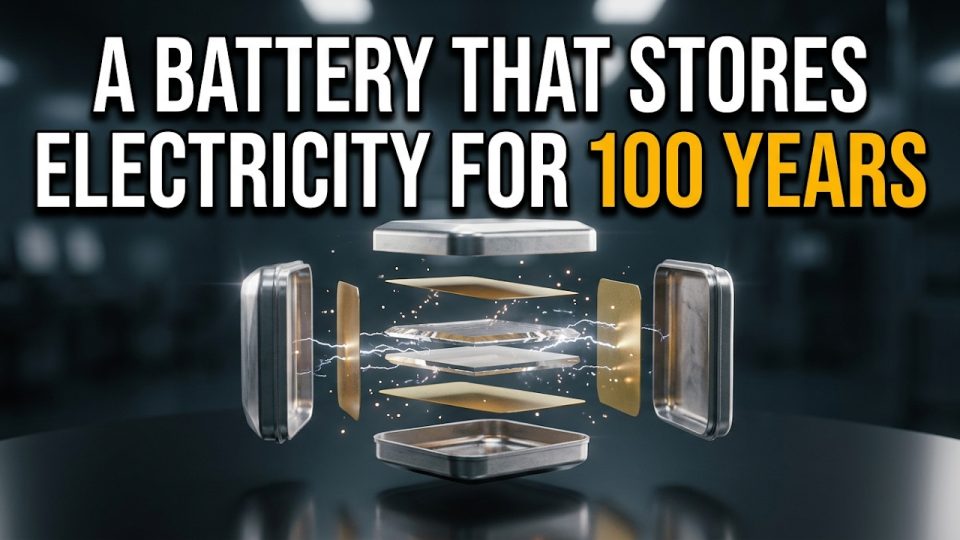
Can We Build a Battery That Stores Electricity for 100 Years
An electric bell at Oxford University has been ringing continuously since 1840—over 180 years on the exact same battery without a single recharge. Meanwhile, the lithium-ion battery inside your smartphone degrades in just a few short years. So why do modern batteries wear out so fast, and can materials science really engineer a battery that stores electricity for an entire century? Standard rechargeable batteries fight an uphill battle against chemical degradation.
Every day, unwanted parasitic reactions, chronic self-discharge, suffocating SEI layer growth, and piercing microscopic lithium dendrites quietly destroy capacity. Liquid electrolytes leak, dry up, or decompose over time. To shatter this lifespan limit, researchers are rethinking battery architecture from scratch. From ceramic and glass solid-state designs that eliminate volatile liquids entirely to molten liquid metal cells and flow batteries that physically separate electrolyte tanks from the cell stack, the race for century-scale storage is accelerating.
In extreme applications, dormant thermal reserve batteries sleep for decades until ignited by pyrotechnic heat, while groundbreaking betavoltaic diamond batteries harvest electrons from radioactive isotopes like Nickel-63 and Carbon-14 to trickle continuous micro-power for thousands of years. Explore the chemistry, trade-offs, and engineering breakthroughs pushing the absolute limits of energy storage. Which long-duration battery tech do you think holds the most promise? Drop your thoughts in the comments below, and don’t forget to like and subscribe for more deep dives into advanced energy and technology!
