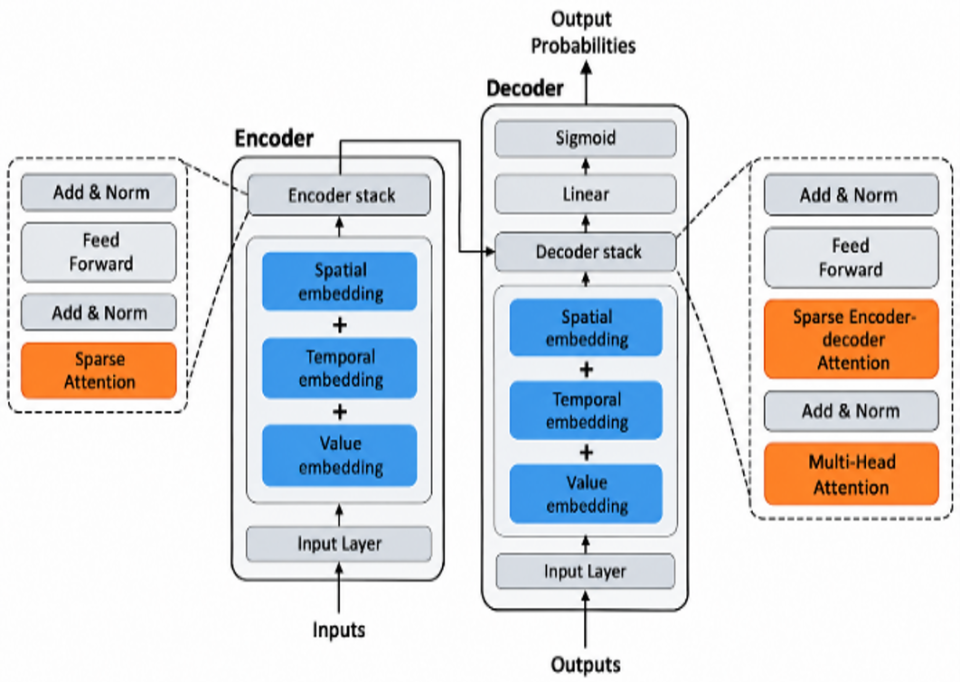
Paper Title: Spatial–temporal approaches for PM2.5 concentration prediction: a review
Authors: Hemant N Patel
Corresponding Author: Hemant N Patel (hp15284@gmail.com)/India
Abstract
PM pollution has become a major environmental concern due to its adverse effects on air quality and human health. Accurate concentration prediction is essential for understanding pollution patterns and supporting effective air quality management. This paper examines statistical analysis, machine learning (ML), deep learning (DL), and data-driven forecasting as spatiotemporal approaches for predicting PM₂.₅ concentrations. Trends in pollution data over time can be identified using statistical models like ARIMA and linear regression. To understand the complex interplay between pollution levels, weather, and other environmental variables, ML techniques have proven highly effective. Transformers, recurrent neural networks, and convolutional neural networks (CNNs) are examples of DL architectures that can learn to extract spatial patterns and capture temporal dependencies across regions and time. The review also discusses spatial–temporal relationships, including autocorrelation, spatial heterogeneity, and cross-region prediction challenges. Ground-based monitoring stations, meteorological observations, reanalysis datasets, and satellite remote sensing provide important inputs for model development. Furthermore, inconsistent spatiotemporal resolution, uneven monitoring station distribution, and missing data remain significant challenges. This study provides a concise overview of current prediction methods, data needs, and practical constraints to support the development of trustworthy spatiotemporal PM₂.₅ forecasting systems and enhanced air quality monitoring.
