Why These Industrial Elements Are More Expensive Than Gold?
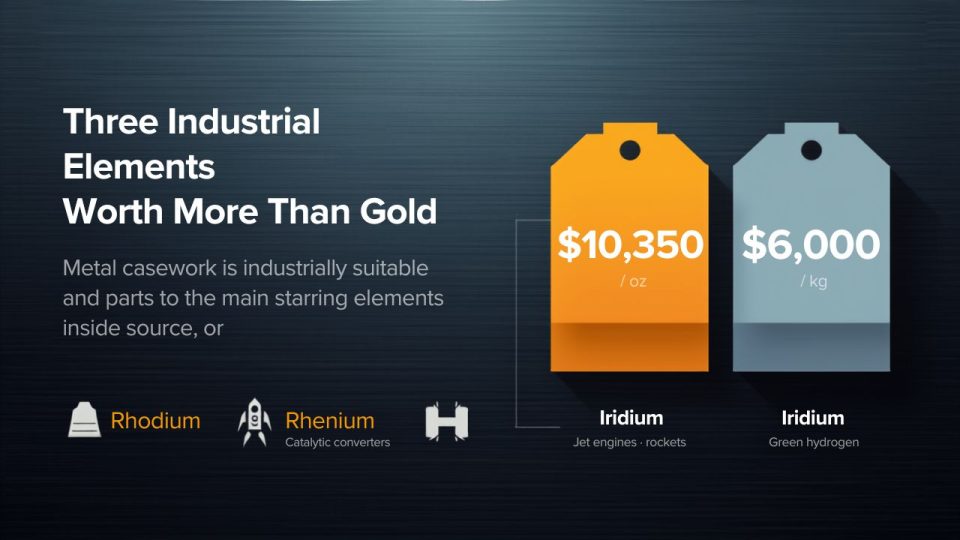
Critical industrial materials play an indispensable role in sustaining modern technological infrastructure, transportation systems, and emerging clean energy technologies. Among these materials, rhodium, rhenium, and iridium represent some of the rarest and most strategically important elements on Earth. This paper provides an overview of the physical properties, industrial applications, global supply chains, and future challenges associated with these three critical elements. Rhodium is primarily utilized in automotive catalytic converters, where its exceptional catalytic activity enables the reduction of harmful nitrogen oxide emissions. Rhenium possesses one of the highest melting points among all elements, making it essential for high-temperature aerospace applications, including jet engine turbine blades and rocket propulsion systems. Iridium exhibits unparalleled corrosion resistance and serves as a key catalyst in proton exchange membrane (PEM) electrolyzers used for green hydrogen production. Despite their technological significance, global production volumes remain extremely limited, with annual outputs measured in only a few tens of tonnes. The concentration of supply in a small number of geographic regions further increases vulnerability to market disruptions and geopolitical risks. As demand continues to rise due to advancements in aerospace engineering, environmental regulations, and the global transition toward sustainable energy systems, securing reliable supplies of these elements will become increasingly important. Understanding their strategic importance is therefore essential for future industrial development, energy security, and technological innovation.
