Paper Title: Global review of the ISO 50001 standard and provision of a framework for improving energy management systems for Iran
Authors: Shayesteh Ebrahimizaker, Mohammadali Allahrabbi Shirazi, Abbas Jallali Farahani, Aref Ghabaei, Seyed Mostafa Mousavi, Hossein Yousefi
Corresponding Author: Hossein Yousefi (hosseinyousefi@ut.ac.ir)/ Iran
Abstract
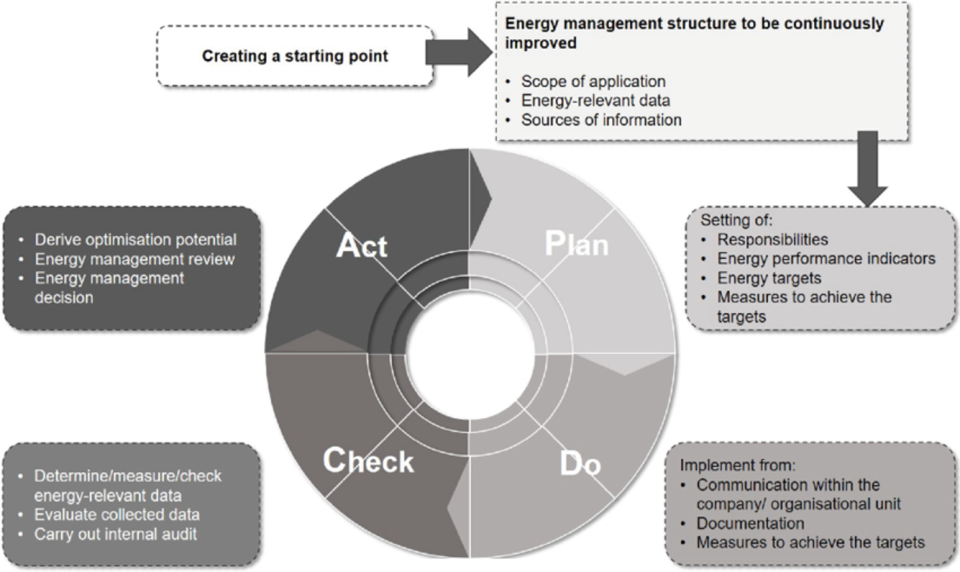
Energy management has become an essential tool for addressing the challenge of sustainable development, driven by rising demand, price volatility, and concerns about global warming. ISO 50001 has emerged as an excellent methodological tool that uses the PDCA (Plan-Do-Check-Act) cycle to enhance an enterprise’s energy efficiency. This article provides a systematic, methodical literature review of quantitative effects and case studies on the application of ISO 50001 in developed and developing nations from 2000 to 2025. By conducting a comprehensive literature search of Scopus, Web of Science, and IEEE Xplore, the article provides a factual description of the ISO 50001 application, which can annually decrease the energy intensity by 41-26%, support long-term efficiency over a period of 12 years, and provide significant cost savings as a byproduct of the reduction in Greenhouse Gas (GHG) emissions. The article emphasizes the critical success factors (CSFs), such as senior management support, organizational values and behavior change, the development of technical capacities, and the development of a supportive policy structure. However, a wide range of constraints still exist, including a lack of funds, technical competencies, organizational resistance, and supportive infrastructure. The article considers a special case of the Iranian nation, which has shown higher values than the global average due to lower energy consumption costs, outdated technology, a lack of management systems, and an abundance of Iranian energy resources. This article encourages the application of a methodological model that includes the PDCA tool, barrier management structured analysis, and the structured maturity development model, among others, by adapting it to the specific case of the Iranian nation.
