Paper Title: Impact of AI on triple bottom line performance and economic sustainability in megaprojects: a systematic review and conceptual framework
Authors: Zilu Ni, Yamunah Vaicondam, Malarvilly Ramayah
Corresponding Author: Yamunah Vaicondam (Yamunah.Vaicondam@taylors.edu.my)/ Malaysia
Abstract
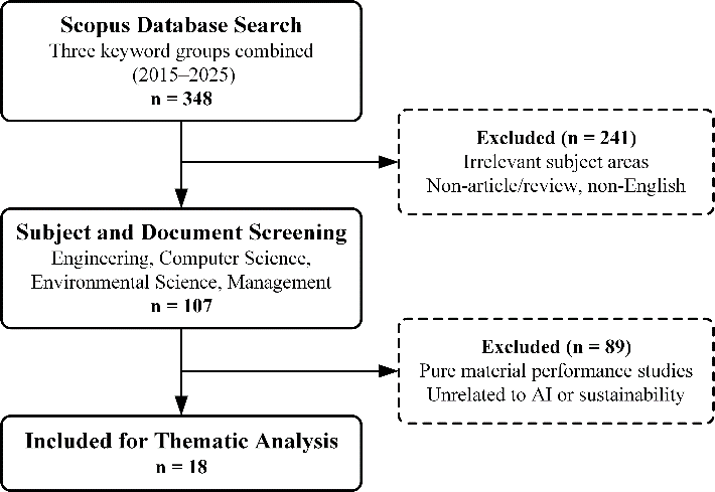
Megaprojects have significant impacts on global infrastructure development, yet they continue to face sustainability challenges, including high costs, environmental damage, and social conflict. Artificial intelligence (AI) technologies are transforming construction management, but there is little literature examining the integration of AI into construction and megaproject sustainability. This gap is addressed through a comprehensive literature review on the impact of AI on the triple bottom line (TBL) performance and economic sustainability of megaprojects and by proposing a conceptual framework supported by research propositions. A Boolean combination of three keywords in the Scopus database resulted in 348 initial articles, from which 18 key articles were selected for further analysis. All three keyword categories identified only five articles pertinent to the current research topic, highlighting a clear knowledge gap. Analysis shows that AI research has matured in economic performance areas such as cost estimation and resource optimization, with 87% of reviewed papers addressing economic aspects. Research on environmental performance, particularly carbon emissions and waste management, has progressed but remains limited. Social performance, including stakeholder management and community impact assessment, is the least explored dimension. Based on the Technology-Organization-Environment (TOE) framework and stakeholder theory, this study develops a theoretical model with three layers: AI technology inputs, TOE conditions, and TBL performance outputs, in which economic sustainability serves as a higher-level outcome. Four propositions are developed to identify how AI impacts each TBL dimension and economic sustainability. This study contributes to the theoretical groundwork and direction for future empirical studies.
