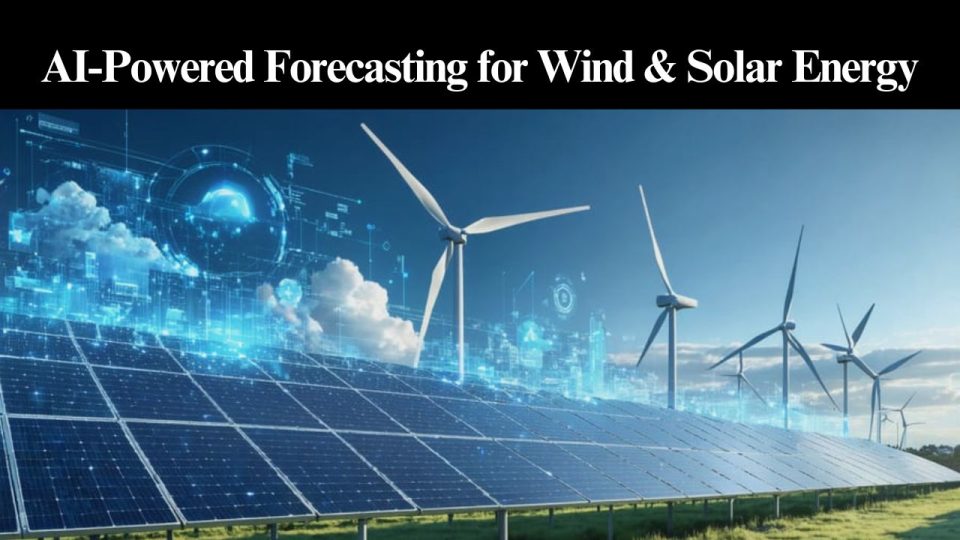
AI-Powered Forecasting for Wind & Solar Energy
AI-based forecasting revolutionizes wind and solar energy by using machine learning and deep learning to predict variable renewable output with far greater accuracy than traditional numerical weather models. These systems process real-time data from satellites, ground sensors, weather stations, and historical patterns to forecast wind speeds, solar irradiance, and power generation over short (minutes to hours) and medium (up to 72 hours) horizons. Advanced techniques such as neural networks (LSTM, CNN), ensemble learning, and generative AI enable precise predictions, often integrating hybrid physics-AI approaches for enhanced reliability. Accuracy improvements are substantial: AI can boost solar forecasts by up to 45% and wind forecasts by up to 25%, reducing mean absolute errors by 20–30% on average. Real-world applications, such as those by Meteomatics, Huawei, and Xcel Energy, demonstrate 10–15% overall gains, helping utilities minimize curtailment, optimize storage, and balance grids more efficiently. Implementation costs include sensors, computing infrastructure, data acquisition, and skilled personnel, often ranging from hundreds of thousands to millions of dollars upfront, with ongoing expenses for cloud processing and model maintenance. While energy-intensive training raises environmental concerns, the return on investment typically arrives within 2–5 years through cost savings in operations, maintenance, and energy trading. Key advantages include improved grid stability, reduced reliance on fossil backup, significant emission cuts, predictive maintenance, and better market participation. However, drawbacks involve high initial costs, data dependency, potential algorithmic biases, cybersecurity risks, and the paradox of AI’s own energy consumption. Despite these challenges, AI is essential for scaling renewables, supporting higher penetration levels and resilience in a changing climate. As edge computing, quantum methods, and policy support advance, AI forecasting will become even more powerful, driving a reliable, low-carbon energy future.
