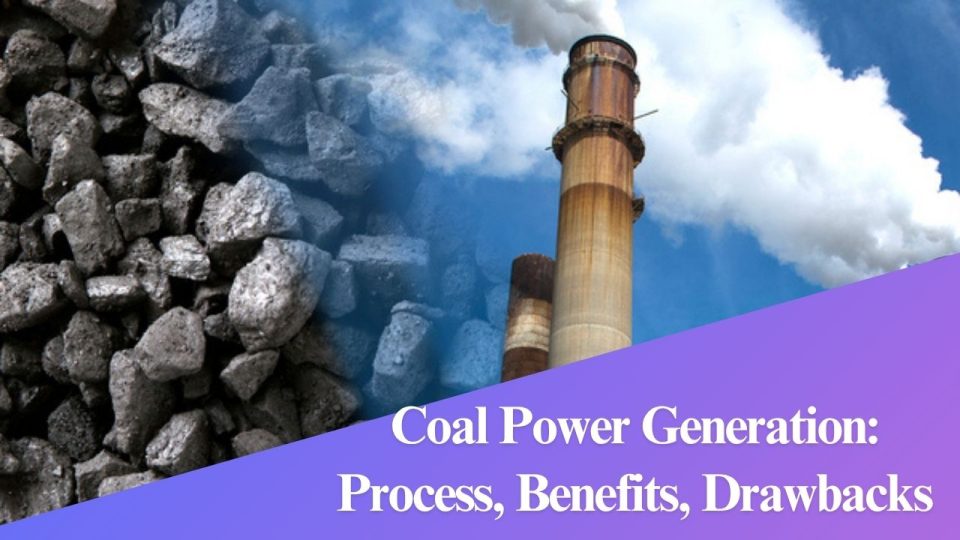
Coal Power Generation | Process, Benefits, Drawbacks
Coal power generation is a traditional method of producing electricity that relies on burning coal to generate steam, which drives turbines connected to generators. The process involves mining coal, pulverizing it, burning it in boilers, and converting water to steam for electricity production. Despite advances in energy technology, coal remains a major source of electricity, especially in countries with large reserves and growing energy demands. The primary advantage of coal power is its reliability and ability to provide base-load electricity. It is also relatively cheap and supports millions of jobs globally. However, coal power has serious environmental drawbacks. Burning coal releases high levels of carbon dioxide (CO₂), sulfur dioxide (SO₂), nitrogen oxides (NOₓ), mercury, and particulate matter, contributing to climate change, air pollution, acid rain, and health issues. Additionally, coal mining degrades land, pollutes water, and harms ecosystems. China, the United States, and India are the top three countries in coal power generation. These countries rely on coal due to its abundance and cost-effectiveness, though each is also working to reduce its reliance through renewables and energy policies. Many developed nations are adopting coal phase-out policies, investing in renewables, and introducing carbon pricing to incentivize cleaner alternatives. The global energy landscape is shifting toward sustainability, and coal is under increasing scrutiny. Technologies like carbon capture and renewable energy integration offer pathways to reduce dependency on coal. Without transitioning, continued coal use could worsen climate change and public health. Yet, any transition must consider economic and social impacts, especially in coal-reliant communities. A global, cooperative effort is essential for reducing coal dependence while ensuring energy equity and economic resilience.
