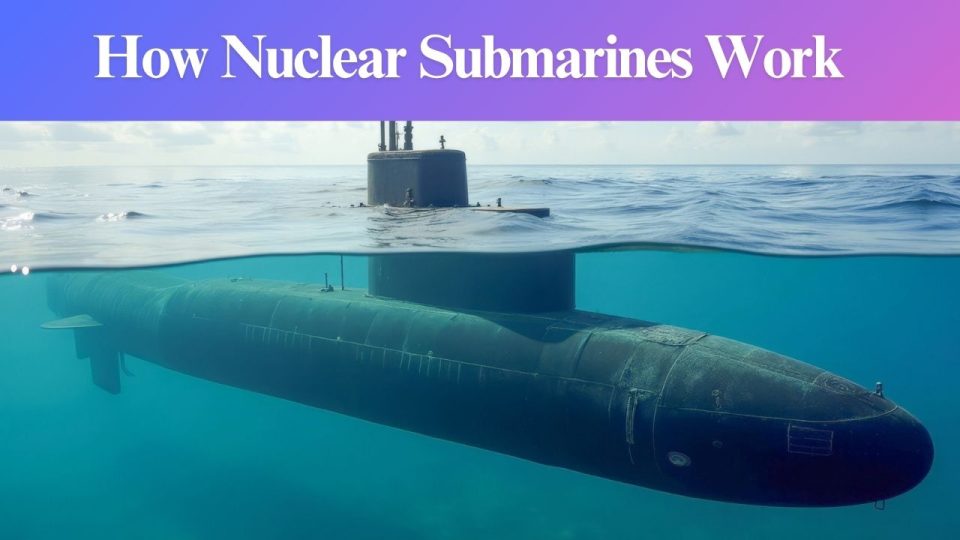
How Nuclear Submarines Work
A nuclear submarine is a technologically advanced vessel powered by a nuclear reactor, allowing it to remain submerged for months at a time without surfacing. The core of its operation lies in a pressurized water reactor using enriched uranium to generate heat through nuclear fission. This heat produces steam that drives turbines, powering both propulsion and onboard systems. Unlike conventional submarines, nuclear submarines offer unmatched endurance, speed, and stealth, making them vital for military strategy and deterrence. There are two main types: attack submarines (SSNs), designed to hunt enemy ships and submarines, and ballistic missile submarines (SSBNs), which carry nuclear missiles for second-strike capability. While nuclear power in these submarines is used for propulsion and not as a weapon itself, many SSBNs serve as key platforms for nuclear deterrence. Their ability to launch missiles while submerged ensures a nation’s retaliatory capacity even in the event of a surprise attack. However, these submarines are expensive, costing between $3 to $8 billion to build, and require significant ongoing maintenance. The handling of radioactive fuel and decommissioning also pose environmental and safety challenges. Strategically, they offer powerful deterrent capabilities but raise concerns about nuclear proliferation and geopolitical stability. Applications of nuclear submarines extend beyond warfare, including surveillance, intelligence gathering, and supporting special operations. Their deployment by major powers like the U.S., Russia, and China underscores their importance in global security. Future advancements may include quieter propulsion, better reactor designs, and enhanced automation. In summary, nuclear submarines are a cornerstone of modern naval warfare, blending power, endurance, and strategic deterrence. While their benefits are substantial, they come with complex technical, economic, and geopolitical considerations that must be carefully managed.
