Paper Title: The impact of job substitution and job intensity on job performance in the process of enterprise digital transformation
Authors: Kang Li, Daranee Pimchangthong
Corresponding Author: Daranee Pimchangthong (daranee.p@mail.rmutk.ac.th)/Thailand
Abstract
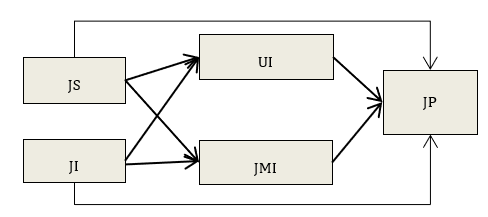
This study explores the effects of job substitution and job intensity on employee performance in the context of digital transformation, focusing on the mediating role of job insecurity (unemployment insecurity and job mobility insecurity). Using confirmatory research methods, we analyzed 1,002 valid samples from seven Chinese furniture manufacturers. A structural equation model (SEM) developed via AMOS 27.0 revealed: (1) Job substitution (standardized coefficient = -0.254, p < 0.001) and job intensity (standardized coefficient = -0.264, p < 0.001) significantly negatively impact job performance; (2) Unemployment insecurity (mediating effect = -0.087 for job substitution; -0.10 for job intensity) and job mobility insecurity (mediating effect = -0.083 for job substitution; -0.113 for job intensity) fully mediate these relationships. This research validates relevant theories, clarifies variable relationships, and enriches digital transformation and human resource management theories. Practically, it provides HR management advice for enterprises, facilitating performance improvement and sustainable development. Methodologically, it constructs a comprehensive framework considering multiple variables, offering a new perspective to analyze the impact of transformation on employees.
Keywords
Digital Transformation, Job Substitution, Job Intensity, Unemployment Insecurity, Job Mobility Insecurity, Job Performance
