Paper Title: Development and characterization of nanocellulose-incorporated Chitosan-starch-based composite films for sustainable packaging for food
Authors:Rusiraka Ranasinghe, Panchali Dias, Bazlul Mobin Siddique
Corresponding Author: Bazlul Mobin Siddique (msiddique@swinburne.edu.my ), Malaysia
Abstract
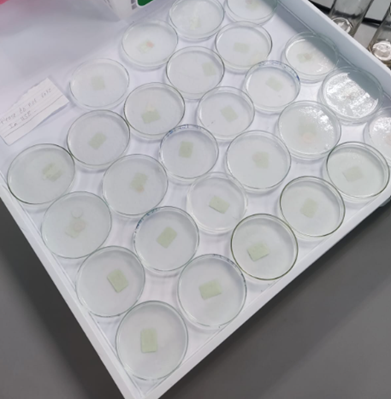
A series of edible chitosan-starch (CS-S) biocomposite films were developed by simple integration of monomers and casting process, which was tested for its physicochemical integrity through tensile strength, FTIR analysis, TGA analysis, water vapor permeability, and opacity. Microcrystalline cellulose (MCC) and cellulose nanofiber (CNF) were used to improve the film’s properties. The film with the highest tensile strength was 2:3 (CS:S) – CNF, which had a value of 8.99 MPa. According to the FTIR data, all nine types of film samples produced were found to have good integration of the added materials robust structure. Also, the film types 2:1 (CS:S) and 2:1 (CS:S) – MCC exhibited the lowest water vapor transmission rate of 0.01 ml/hr. When the prepared films were tested using a UV spectrophotometer, the film samples that did not contain MCC and CNF had the lowest reported opacity. The 2:3 (CS:S) – CNF film type exhibited the highest tensile strength, an average water vapor transfer rate, and an average opacity for all the film samples developed. The developed film has a high potential to be employed as a biocomposite film in edible coatings for food preservation.
Keywords
Chitosan-starch composite, Microcrystalline cellulose (MCC), Cellulose nanofiber (CNF), Tensile strength, Opacity, Water vapor
