Paper Title: Taguchi optimization of hybrid agro-aquatic waste-reinforced epoxy composite for enhanced mechanical performance
Authors: Stepehn Takim, Godwill Akeke, Sunday Chimezie, Adeola Samuel
Corresponding Author: Stepehn Takim (stephentakim@unicross.edu.ng)/Nigeria
Abstract
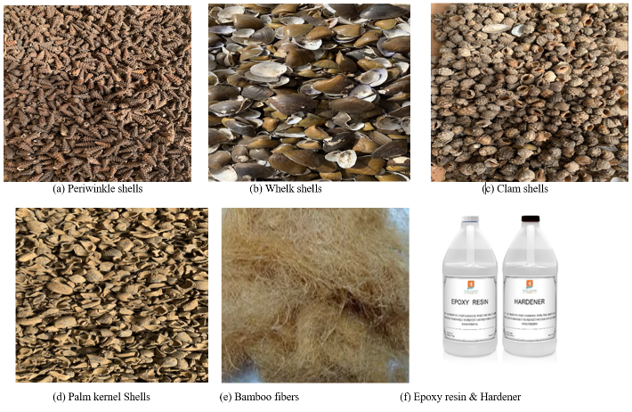
The choice of engineering materials substantially contributes to the longevity and output–to–input ratio of machines and structures. There is growing interest in sourcing local engineering materials that are more durable than synthetic materials. The mechanical characteristics of these engineering materials must meet acceptable standards. This study examined reinforcing hybrid agro-aquatic waste with epoxy resin as an additive. Since natural materials are biodegradable and renewable, they are an environmentally friendly alternative to conventional materials in engineering applications. This has led to a growing trend in using bio-composites made from natural materials. This study aimed to optimize the strength of hybrid agro-aquatic samples made from bamboo fiber, whelks, clams, periwinkle shells, and palm kernels bonded with resin to improve engineering performance. The composites were made using a hand lay-up technique with varying percentages of shells and fiber (10-30%), mixed with different amounts of epoxy resin. Tensile, impact, flexural, and water absorption tests were performed on the cured samples after 24 hours. The Taguchi L25 (5×5) orthogonal array was used to optimize the experimental trials in Minitab 18, with five design parameters at five levels each. The results showed an average flexural strength of 114.87 MPa, while the unreinforced bio-composite had 72.33 MPa. Turning agricultural waste into engineering materials such as bamboo fiber, clams, palm kernel shells, whelk shells, and periwinkle shells can positively impact the building industry.
