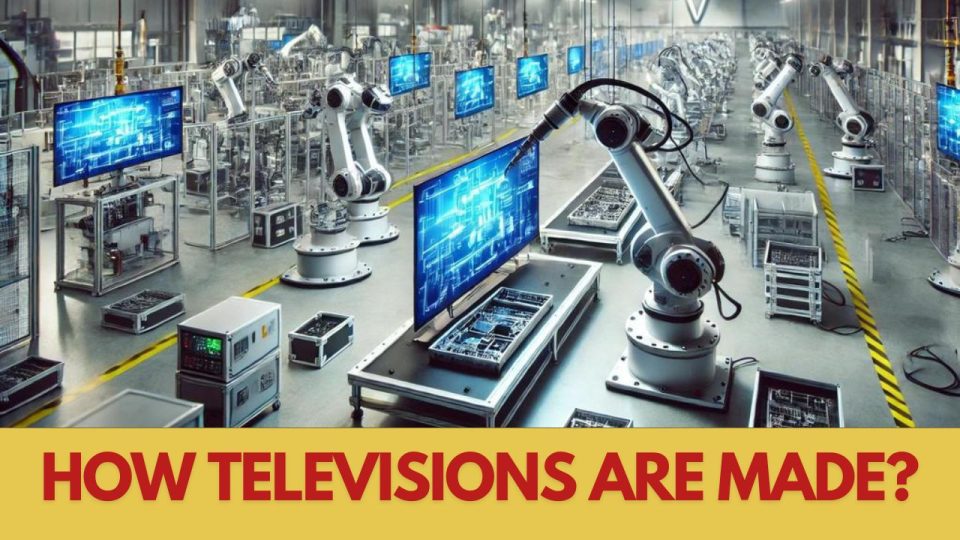
How televisions are made?
The manufacturing process begins with the design and assembly of the display panel, which is the heart of the TV. Modern TVs primarily use LED or OLED technology. LED TVs are built with liquid crystal display (LCD) panels backlit by light-emitting diodes, offering brightness and energy efficiency. In contrast, OLED TVs utilize organic compounds that emit light when an electric current passes through, providing superior contrast and color accuracy.
The production of a television involves multiple steps: Display Panel Creation: Thin glass sheets are layered with liquid crystals (for LCDs) or organic compounds (for OLEDs). Assembly of Electronics: The TV’s processor, circuit boards, and ports are installed to manage picture and sound quality, connectivity, and smart functions. Frame and Casing: The screen and electronic components are encased in a sleek, durable frame. Quality Control: TVs undergo rigorous testing to ensure clarity, durability, and functionality. Software Integration: Smart TVs are equipped with operating systems for streaming, apps, and voice controls. Finally, the televisions are packaged and shipped to retailers worldwide.
