Paper Title: Numerical simulation and control measures for deflagration in ventilation ducts of polyimide foam production line
Authors: Yiting Li, Liang Jiang, Zhangsheng Yin, Mingchao Yin, Tianyu Guo, Donglin Yang, Xiaohong Gui
Corresponding Author: Xiaohong Gui (gxhbox@sina.com)/China
Abstract
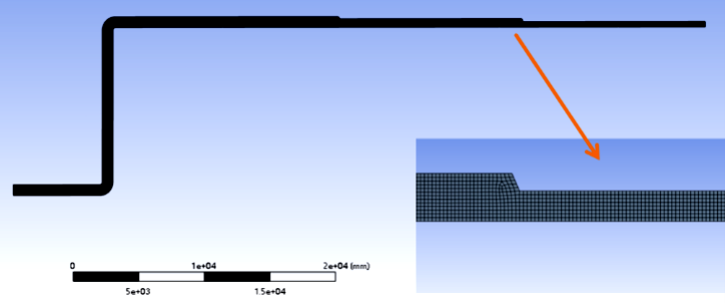
Polyimide foam exhibits excellent high-temperature resistance, flame retardancy, and sound absorption performance, and is widely used in aerospace, advanced equipment, and other high-tech fields. However, its production process involves inherent deflagration risks from combustible dust and volatile organic gases. Using the ventilation and dust-collection duct of a polyimide foam production line as the research object, this paper establishes a numerical deflagration model in ANSYS Fluent to investigate the propagation behavior of gas-dust mixtures inside the duct. The evolution characteristics of velocity, temperature, pressure, species distribution, and particle motion are systematically analyzed. Quantitative results show that the peak gas temperature in the main reaction zone reaches approximately 1680 K, the maximum local flow velocity is 24.3 m/s, and the minimum gas density drops to 0.20–0.40 kg/m³. The middle horizontal section of the duct is identified as the primary deflagration zone, while elbows and areas with structural discontinuities are high-risk locations with significant pressure concentration and flow turbulence. Based on this, targeted risk control measures are proposed, including duct structure optimization, explosion venting and isolation arrangement, dust concentration management, online monitoring system construction, and ignition source control. This study provides theoretical support for explosion-proof design and safety optimization of ventilation and dust removal systems in polyimide foam production lines.
