Paper Title: Ethiopia’s quest for energy security: challenges and policy options
Author: Tesfaye Bezabih Gezihagne
Corresponding Author: Tesfaye Bezabih Gezihagne (tbezabih@gmail.com)/Ethiopia
Abstract
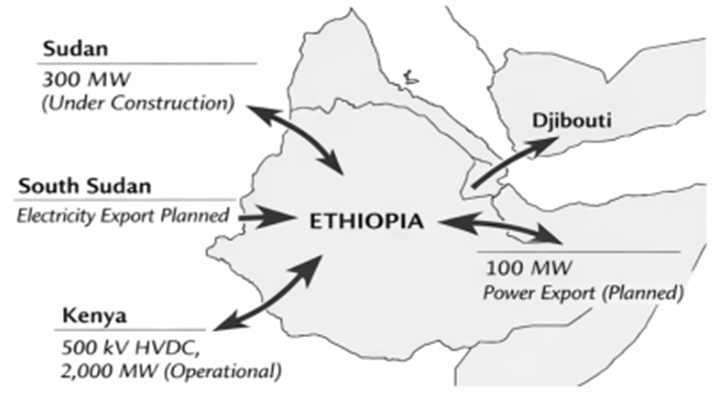
Energy security is at the heart of leveraging economic growth and social development, as well as environmental sustainability in third-world countries. An alarming rate of population growth, the society’s energy demand, and the expansion of manufacturing and industrial production have further strained an already structurally vulnerable energy system in Ethiopia. Despite the country having made vital investments in renewable energy, particularly in hydropower, it still faces challenges related to climate variability, unequal access, institutional fragmentation, and regional geopolitics. This study examines Ethiopia as a multidimensional nation in terms of its energy security by assessing the social, environmental, institutional, and geopolitical constraints. The research employs a qualitative case study design, based on semi-structured interviews with key stakeholders and an in-depth review of policy documents, official government reports, and international datasets. Likewise, document review, as a tool, and thematic analysis, as a research method, are used to identify key patterns, risks, and policy gaps in energy system resilience. The results of the study showed that the high dependence on climate-dependent hydropower sources in Ethiopia presents the energy industry to supply volatility and financial difficulties, particularly in dry seasons. Poor rural electrification, reliance on traditional biomass, and inadequate transmission infrastructure are key drivers of end-of-life energy poverty and social imbalance. Institutional coordination issues and insufficient funds to expand these sources are among the barriers to diversifying renewable energy sources. Regularly, exporting electricity to foreign nations entails economic and diplomatic benefits, as well as political tensions and regulatory uncertainties. In the study, the researcher emphasizes the necessity of a comprehensive energy security system comprising climate resilience, social equity, institutional coherence, and proactive regional diplomacy. Policy guidelines focus on diversifying the energy mix, strengthening governance systems, decentralizing energy systems, and improving cross-border collaboration. The overall, inclusive approach can help Ethiopia increase the reliability, affordability, and sustainability of its energy system, as well as support national and regional development in the long term.
Keywords
Energy security, Hydropower dependency, Energy policy, Energy diversification, Energy access, Energy transition
Cite:
Gezihagne, Tesfaye Bezabih. 2026. “Ethiopia’s Quest for Energy Security: Challenges and Policy Options”. Future Energy 5 (2):21-29. https://fupubco.com/fuen/article/view/828.
