Paper Title: Empowering vocational education in Africa through AI and deep learning technologies
Authors: Ming Huang, Yap Teng Teng, Shahazwan Mat Yusoff
Corresponding Author: Shahazwan Mat Yusoff (shahazwan@um.edu.my)/ Malaysia
Abstract
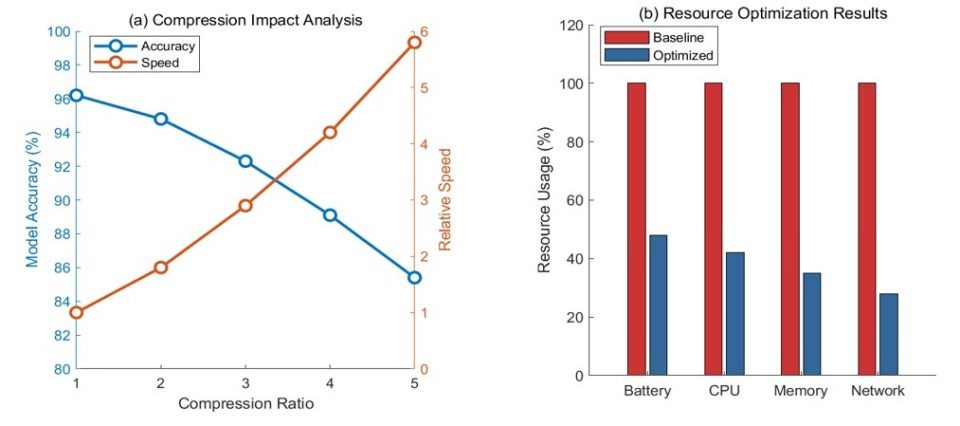
Vocational schools in Sub-Saharan Africa face critical challenges, including inadequate equipment, insufficient funding, and curricula misaligned with industry needs. This study explores how artificial intelligence (AI) and deep learning address these challenges through empirical research in Nigeria and Kenya. The research tests adaptive learning systems with 742 students, comparing AI-enhanced with traditional methods. Results demonstrate 68% faster skill acquisition (t=4.82, p<0.01, d=0.68) and improved job readiness (χ²=18.3, p<0.05). Model compression to 45-75MB enables deployment on basic smartphones while maintaining 92% accuracy. Implementation includes mobile-first platforms tested in three Nigerian vocational centers and automated skill recognition systems deployed in two Kenyan technical schools. The findings confirm that properly localized AI solutions can transform vocational training in resource-limited contexts, though sustainability challenges remain.
Keywords
Artificial intelligence, Deep learning, Vocational education, Workforce development, Adaptive learning
Cite:
Ming Huang, Yap Teng Teng, Shahazwan Mat Yusoff, 2025. “Empowering vocational education in Africa through AI and deep learning technologies” Future Digital Technologies and Artificial Intelligence 1.2 (2025): 27-32. https://doi.org/10.55670/fpll.fdtai.1.2.4
