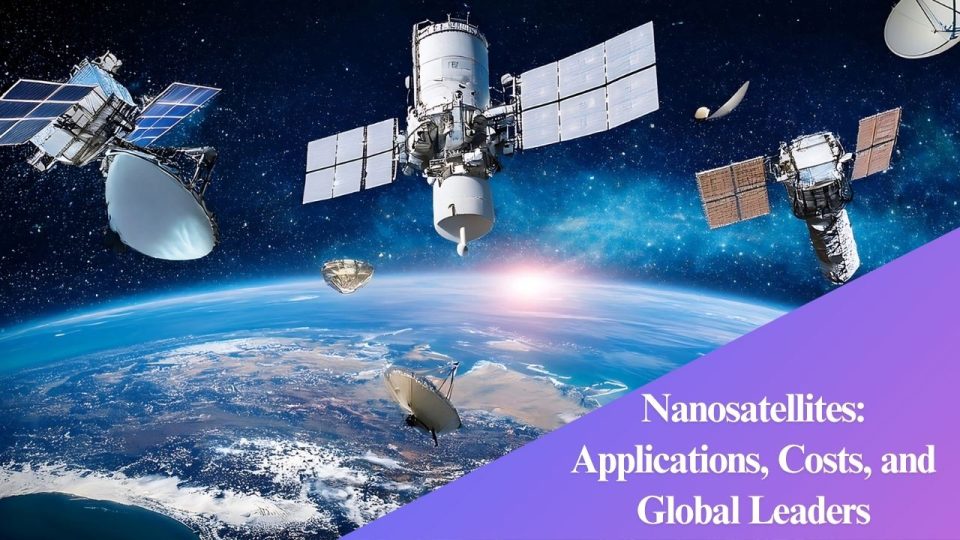
Nanosatellites: Applications, Costs, and Global Leaders
Nanosatellites, typically weighing between 1 and 10 kilograms, have revolutionized space technology by offering low-cost, compact, and efficient alternatives to traditional satellites. Their primary applications include Earth observation, scientific research, global communication, defense surveillance, and space situational awareness. Equipped with sensors, cameras, and communication modules, nanosatellites can monitor environmental changes, support remote connectivity, conduct microgravity experiments, and track orbital debris. Their modular design—often based on the CubeSat standard—allows for rapid development and deployment, with costs ranging from $50,000 to $500,000 per satellite. Driven by affordability and scalability, nanosatellites have become widely accessible to universities, startups, emerging nations, and major aerospace players. The United States leads in nanosatellite development, followed by countries like China, Russia, Japan, and members of the European Union. Emerging nations such as India, Brazil, and the UAE have also entered the field, leveraging nanosatellites for local development and educational purposes. Launch opportunities have expanded with providers like SpaceX, Rocket Lab, and ISRO offering affordable rideshare programs. However, nanosatellites typically operate in low Earth orbit (LEO) and have limited lifespans of a few months to several years. Upon mission completion, most nanosatellites naturally deorbit and burn up in Earth’s atmosphere, though some are equipped with passive or active deorbit systems to ensure responsible disposal. With increasing launch frequency, space debris has become a major concern. Global space agencies and regulatory bodies are urging compliance with post-mission disposal guidelines. Future nanosatellites are being designed with propulsion, AI, and advanced communication tools to extend functionality and reduce risks. Overall, nanosatellites have democratized space access and opened new opportunities across science, industry, and national development while pushing innovation in sustainable space practices.
