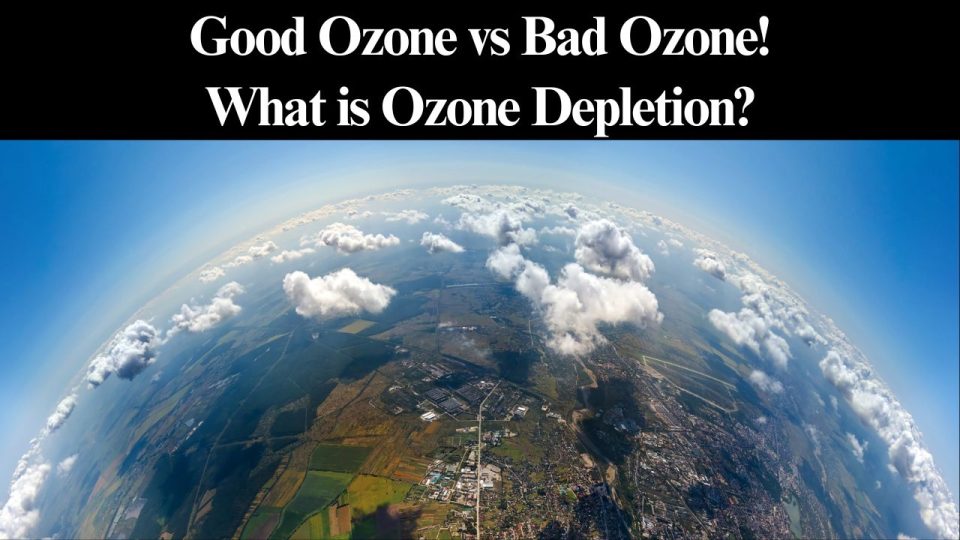
Good Ozone vs Bad Ozone! What is Ozone Depletion?
Ozone (O₃) is a molecule composed of three oxygen atoms that plays both beneficial and harmful roles depending on its location in the atmosphere. “Good ozone” exists in the stratosphere (10–50 km above Earth) and forms the ozone layer, which protects life by absorbing harmful ultraviolet (UV-B) radiation from the sun. It is created naturally when UV-C rays split oxygen molecules (O₂), forming free oxygen atoms that combine with O₂ to produce ozone. This layer is vital for human and environmental health. In contrast, “bad ozone” is found in the troposphere, near the Earth’s surface. It forms through chemical reactions involving nitrogen oxides (NOₓ), volatile organic compounds (VOCs), and sunlight—mainly from vehicle emissions, industrial activity, and power generation. Ground-level ozone is a major air pollutant, causing respiratory illnesses, aggravating asthma, damaging crops, and contributing to smog. Ozone layer depletion occurs when human-made chemicals like chlorofluorocarbons (CFCs) break down ozone in the stratosphere. These substances release chlorine and bromine, which destroy thousands of ozone molecules. The Antarctic ozone hole, first identified in the 1980s, led to the Montreal Protocol (1987), an international treaty to phase out ozone-depleting substances. Since then, recovery has been underway, though challenges remain. Ozone’s powerful oxidative properties also make it useful in various industries. It is widely used for disinfecting drinking water and wastewater, sterilizing food processing environments, and bleaching in the paper and textile industries. Ozone is also applied in air purification, medical therapies, and cosmetics, though care must be taken to avoid overexposure due to its toxic effects. In summary, ozone is essential yet potentially harmful. Protecting the stratospheric ozone layer while minimizing ground-level ozone pollution requires global cooperation, cleaner technologies, and public awareness, ensuring both environmental safety and industrial benefit.
