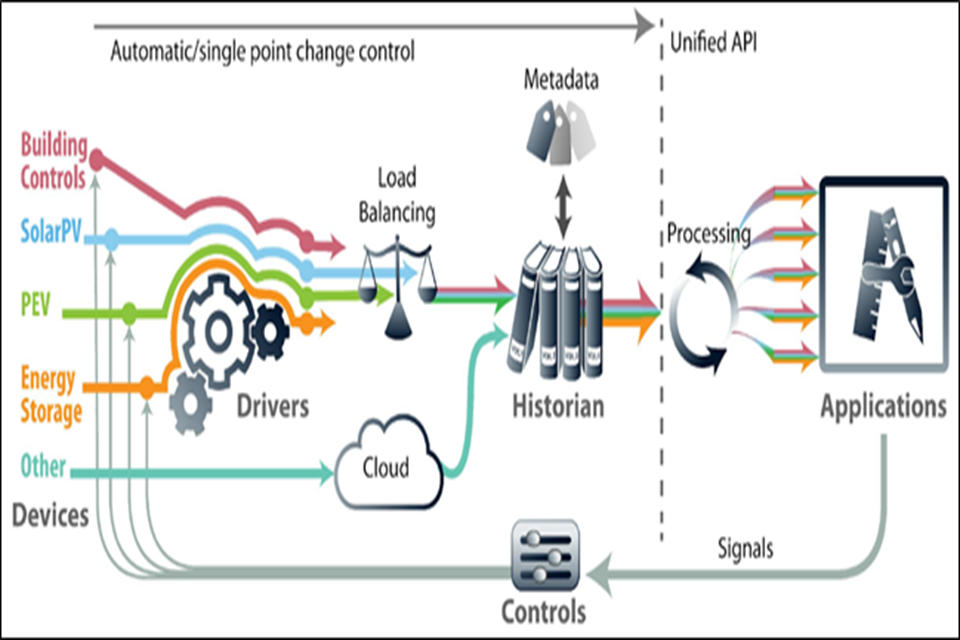
Paper Title: Deep-learning-based multi-timescale load forecasting in buildings: opportunities and challenges from research to deployment
Authors: Sakshi Mishra, Stephen M. Frank, Anya Petersen, Robert Buechler, Michelle Slovensky
Corresponding Author: Sakshi Mishra (sakshi.m@outlook.com)
Abstract
Electricity load forecasting for buildings and campuses is becoming increasingly important as the penetration of distributed energy resources (DERs) grows. Efficient operation and dispatch of DERs require reasonably accurate predictions of future energy consumption in order to conduct near-real-time optimized dispatch of on-site generation and storage assets. Electric utilities have traditionally performed load forecasting for load pockets spanning large geographic areas, and therefore, forecasting has not been a common practice by buildings and campus operators. Given the growing trends of research and prototyping in the grid-interactive efficient buildings domain, characteristics beyond simple algorithm forecast accuracy are important in determining the algorithm’s true utility for smart buildings. Other characteristics include the overall design of the deployed architecture and the operational efficiency of the forecasting system. In this work, we present a deep-learning-based load forecasting system that predicts the building load at 1-hour intervals for 18 hours in the future. We also discuss challenges associated with the real-time deployment of such systems as well as the research opportunities presented by a fully functional forecasting system that has been developed within the National Renewable Energy Laboratory’s Intelligent Campus program.
Keywords
Smart Grid, Recurrent Neural Networks, Long Short-Term Memory Networks, Building Load Forecasting, Grid-Interactive Efficient Buildings, Deep Learning
Cite:
Mishra, Sakshi, Stephen M. Frank, Anya Petersen, Robert Buechler, and Michelle Slovensky. 2024. “Deep-Learning-Based Multi-Timescale Load Forecasting in Buildings: Opportunities and Challenges from Research to Deployment”. Future Energy 3 (4):47-55. https://fupubco.com/fuen/article/view/189.
