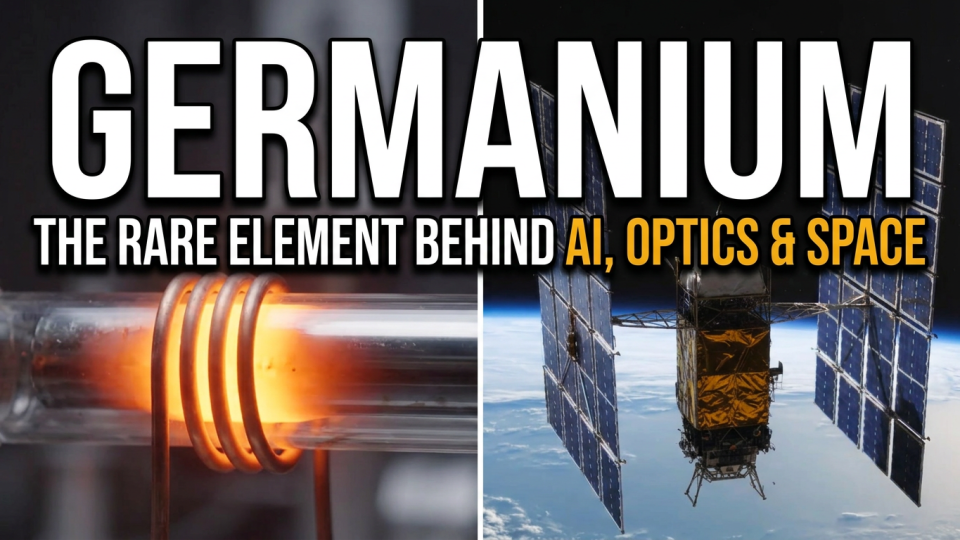
How Germanium Is Made | The Rare Element Behind AI, Optics & Space
Germanium looks like a dull grey crystal. It is opaque to your eyes but transparent to heat radiation, which is why it sits inside thermal cameras. It also helps guide internet light through optical fiber, powers satellite solar cells, and speeds up modern chips. Almost nobody mines it on its own.
In this video, we follow germanium from the first transistor at Bell Labs in 1947 to the reason silicon took over. We look at its refractive index of about four and how infrared lenses see heat through smoke and darkness. Then we trace the extraction chain: how germanium hides in zinc ore and coal ash, how smelters and chemists leach it out, how germanium tetrachloride is distilled, and how zone refining pushes purity to nine nines before crystals are grown into wafers and lenses.
You will also see how germanium dioxide shapes the core of optical fiber behind the AI data-center boom, how triple-junction cells power spacecraft, where silicon-germanium chips fit into 5G and radar, and why export controls and rising prices have turned this rare byproduct into a strategic bottleneck.
