Hybrid Renewable Energy Systems: Powering the Future
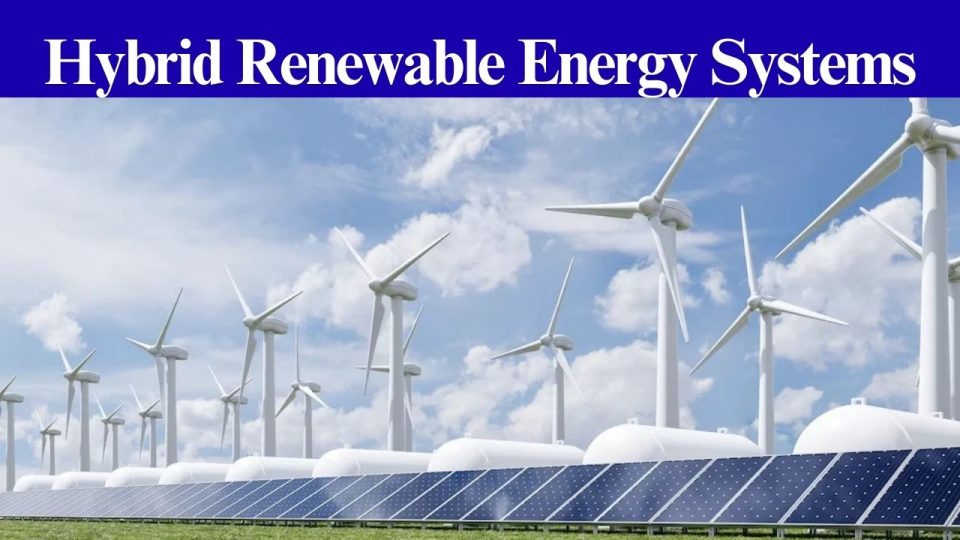
A hybrid renewable energy system (HRES) integrates multiple renewable sources—primarily solar photovoltaic (PV), wind turbines, and often battery energy storage systems (BESS), sometimes with hydro, biomass, or geothermal—to deliver reliable, efficient power. By combining complementary resources (e.g., solar peaks daytime, wind stronger at night), hybrids overcome intermittency of standalone renewables, achieving higher capacity factors (60-80%) and more consistent output than single-source systems (20-40%). Key benefits include enhanced reliability for uninterrupted supply, especially in remote or variable climates; significant environmental gains with 80-90% CO₂ reduction compared to fossil fuels; improved energy security by minimizing fossil dependence; and long-term economic savings through free “fuel” and low operations costs. Advanced energy management systems (EMS) optimize performance using AI for real-time predictions, while shared infrastructure reduces land use and redundancy. Hybrids support grid stability, provide ancillary services like frequency regulation, and enable off-grid electrification in rural areas, fostering jobs and health improvements via cleaner air. Costs remain a major hurdle: high upfront capital for components (solar ~$0.30-0.50/W, wind ~$1,000-2,000/kW, batteries ~$100-200/kWh) leads to total investments from tens of thousands for small setups to millions for utility-scale projects. Additional expenses arise from site assessments, power electronics, and maintenance (1-2% annually), with battery replacements every 10-15 years. However, declining technology prices and incentives (e.g., tax credits) yield a competitive levelized cost of energy (LCOE) often $0.03-0.10/kWh in optimal sites, with payback in 5-10 years. Disadvantages encompass technical complexity requiring sophisticated controls prone to failures; site-specific limitations; environmental impacts like habitat disruption or mining for batteries; social barriers such as high initial costs for low-income areas, skill shortages for maintenance, and potential local opposition. Despite challenges, hybrids are pivotal for sustainable energy transitions, with 2026 trends showing rapid growth in solar-wind-battery integrations and policy support driving scalability.
