
Biography
Dr. Lauretta Rubino is an International Technical Expert with over 20 years experience in Project Management, R&D, After-treatment Systems, Nanoparticle emissions measurements & filtration, Gasoline & Diesel Particle Filters, Systems Engineering, PEMS, Alternative Fuels, International Emissions legislation, EU Emissions Policies, International Patents & IPR. Proven track record in acquisition and execution of projects, effectively managing simultaneous workstream & a variety of stakeholders. Work experiences in Universities (Imperial College London, University of Toronto, University of Rome Tor Vergata), Research centre (EU Commission JRC), OEMs (GM, PSA Group, OPEL, STELLANTIS), Filter manufactures (CORNING) & Coaters (Johnson Matthey), Instrument Manufactures (SENSORS). External expert and proposal evaluator at EU Commission (HORIZON EU projects) and EIT start-ups Mentor. A Leader, strong execution Project Manager, problem-solver & strategic decision maker with the ability to break-down complex R&D projects and lead large cross-functional teams in multicultural environment.
Full profile: https://www.linkedin.com/in/laurettarubino/?originalSubdomain=de
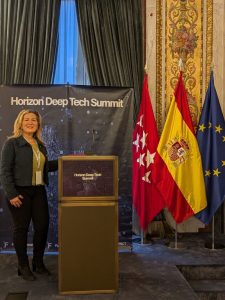
- Future: You’ve had a long career working on after-treatment systems, nanoparticle emissions, R&D, and legislation (as detailed on the VERT and LR Consulting websites) — what motivated you early on to specialize in ultrafine particle emissions and after-treatment technologies, and how has that motivation evolved over time?
Dr. Rubino: Since I was a child, I always wanted to do something useful for society and the environment. I love nature and my passion for the environment started at an early stage.
My initial specialization was driven by the challenge of controlling the “invisible” impact of ultrafine particle emissions. Early in my career, my work at the University of Toronto (1997-1999) focused on the theoretical and experimental study of techniques to reduce soot formation in flames. This led to a Ph.D. at Imperial College London (1999-2003) that focused on the theoretical and experimental study of techniques for ultrafine particles capture in engine exhausts.
My motivation has evolved from fundamental academic research to implementing practical solutions and influencing policy. Key early research addressed the challenge of controlling these emissions from spark-ignition engines, as detailed in my work on “After-treatment of Nanoparticle Emissions from Gasoline Engine Exhausts” and “An Electrostatic Trap for Control of Ultrafine Particle Emissions from Gasoline-engined Vehicles”.
- Future: As CEO of the VERT Association since September 2022, how do you see the role of VERT evolving in the context of emerging mobility technologies (e.g., electrification, hydrogen, synthetic fuels) and stricter air quality regulations?
Dr. Rubino: As CEO of the VERT Association since September 2022 , I strongly believe in the importance of preserving the environment for future generation to come and we are highly committed to reducing the harmful nanoparticle emissions from all sources by using the best available technologies. Our role is to act as a technology-neutral consultancy for air quality improvement and cleaner mobility. The association must evolve its Strategy Management and Innovation with focus on new mobility challenges. Our expanded mandate centers on:
1. Closing the Compliance Gap: Promoting policies like Nanoparticle Counting for Periodic Technical Inspection (PTI) to effectively reduce urban PN pollution from high-emitting “Dirty Tail” vehicles.
2. Implementation of Real-World Solutions: Leading European Projects like HORIZON Europe AeroSolfd , which includes the VERT GPF-Retrofit Program for Cleaner Urban Mobility.
3. Cross-Sector Collaboration: Driving international collaborations with universities, the EU Commission, and governmental organizations.
- Future: Your consultancy firm, LR Consulting, lists expertise in tailpipe and non-tailpipe emissions (brakes, tyres) and nanoparticle measurement. Could you pick a recent project that stands out, describe its challenges and key outcomes, and how it might shape future best practice?
Dr. Rubino: A significant recent project, under my leadership at LR Consulting and VERT , has been the GPF-Retrofit Program for Cleaner Urban Mobility within the HORIZON Europe AeroSolfd Project.
- Challenge: The core challenge was implementing a GPF retrofit program for high-mileage gasoline vehicles, both DI and PFI, to prove its efficacy in real-world scenarios, which supports a “pragmatic proposal to strongly reduce urban nanoparticle (PN) emissions” from in-use combustion engine fleets.
- In addition brake wear emissions were reduced by filtration – circa 40% applying a passive brake solution, and Air Quality improved by using air purifiers in semi-closed environment like metro station, i.e. the case of a Metro station in Lisbon.
- Key Outcomes: The project provided field data demonstrating the technical feasibility and impact of retrofitting, directly informing best practice for regulating and controlling the “Dirty Tail Paradigm”, in other words, it is possible to identify the “high emitters” by measuring PN emissions for both diesel and gasoline vehicle fleets. This work, along with other related research on nanoparticle emissions and secondary emissions, highlights the significant potential of PN reduction using Particulate Filters and provides immediate low-cost effective solutions.
- Future: With your background in system engineering, project management, and R&D across academia, industry, and the EU Commission [e.g., at Imperial College London, Johnson Matthey, Corning Incorporated, OEMs etc.] — how do you navigate the differences in culture, objectives, and speed between academic research, industry development, and regulatory bodies?
Dr. Rubino: My background spans academia (Imperial College, University of Toronto) , industry (Johnson Matthey, Corning, General Motors, PSA/Stellantis) , and the regulatory sector (European Commission JRC – Scientific Officer, 2005-2008).
- Academic/Research: I translated fundamental theoretical studies into industry-relevant R&D.
- Industry/Development: As a Lead Technical Expert at OEMs , I ensured R&D projects led to delivery and implementation, achieving international patents and global legislation compliance.
- Regulatory/Policy: My role at the JRC involved leading the EU PM PEMS program and supporting EU emissions legislation activity for both heavy-duty and light-duty vehicles. This experience allowed me to provide unbiased, verifiable data to governmental authorities and the EU Commission.
- I enjoy multicultural environments and I highly appreciate diversity in a team. I navigated different work environments as I was always curious about the different perspectives; I always valued different approaches to challenges and different solutions according to company core values.
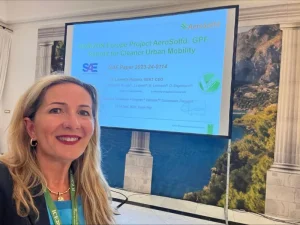
- Future: The VERT website emphasizes VERT’s role as “consultant for air quality and improvement” and its network with legislators. In your view, what are the most significant regulatory or policy bottlenecks currently preventing faster adoption of effective emission-control technologies globally?
Dr. Rubino: In my opinion, the most significant regulatory bottlenecks stem from weaknesses in in-service compliance and lagging standards for new emission sources:
- Inadequate In-Service Compliance: The failure to monitor the “Dirty Tail” of high-emitting vehicles, which requires the mandatory adoption of systems like Nanoparticle Counting for PTI.
- Lack of Real-World Verification: Historically, compliance has suffered from the gap between laboratory results and real-world performance, despite my team’s early efforts to develop on-board PM measurement systems (PEMS) for both heavy-duty and light-duty vehicles in Europe.
- Importance to stress the health effects of nanoparticle emissions and high numbers of such particles (PN) in addition to particle mass (PM); we need new standards that better regulate the harmful emissions of the invisible nanoparticles from both tailpipe and non-tailpipe.
- Future Policy Gaps: The need for comprehensive legislation on non-tailpipe emissions (brakes, tires) remains a challenge, which is why my consultancy focuses on providing solutions and expertise in this area.
- Future: Considering the shift toward urban mobility, retrofit programmers (e.g., GPF retrofit in the HORIZON Europe project you’re involved in) and non‐tailpipe emissions (brakes, tires, indoor exposures) — how do you prioritize research and investment efforts? What gives the highest return in health/environment vs cost today?
Dr. Rubino: Prioritization must be based on maximizing the return on health and environment versus cost, targeting the most critical urban sources. VERT has also been calculating the impact and cost/benefit analysis of the application of particulate filters to both the diesel and gasoline vehicle fleet, in order to highly reduce health care costs. In addition, by reducing black carbon with the wide spread of particle filters this has also a strong impact on global warming.
| Rank | Investment Focus | Rationale (High Return) |
| 1. | Existing Fleet Retrofit (e.g., GPF/DPF) | Immediate, high-impact reduction of pollution from existing vehicles, proven effective by the VERT GPF-Retrofit Program. |
| 2. | Real-World Monitoring (PEMS/PTI) | Investing in advanced measurement is essential to ensure continuous compliance and identify the “Dirty Tail,” based on my R&D experience with PEMS from 2005 to 2010. |
| 3. | Non-Tailpipe Abatement | Technologies addressing brake and tire wear are essential to improve air quality as tailpipe emissions decline, aligning with LR Consulting’s core expertise. |
Despite the increasing focus on electrification, the Heavy-Duty (HD) transport sector is fundamentally different and it will remain longer reliant on combustion technologies—albeit cleaner ones—for the next two-three decades.
- Future: For your consultancy and for VERT’s work, measuring and controlling nanoparticle emissions is a recurring theme. From your experience, what are the most pressing measurement technological gaps (e.g., in instrumentation, real-world testing, standardization) and how do you anticipate they will be addressed in the next 5–10 years?
Dr. Rubino: In my experience, spanning the development of the European PMP and PEMS programs , the most pressing measurement technological gaps are:
- Standardization for New Sources: A critical need for standardized, reproducible test methods for non-tailpipe emissions (brakes, tires).
- Real-World Instrumentation: The need for better, more rugged, and affordable Portable Emission Measurement Systems (PEMS) to accurately capture real-world PN/PM emissions as well as NOx and secondary emissions such as PAHs, nitroPAHs etc. during normal vehicle operation on road.
- Ultrafine Particle Resolution: Regulatory tools need improved instrumentation to accurately measure and control ultrafine and nanoparticle number emissions below the current regulatory size, continuing the work begun with techniques like SMPS, DMS, ELPI, and EEPS.
- Emissions legislation harmonization: The need for more harmonization in terms of emissions legislations and technical solutions among different countries.
- Future: With the interest in sustainable mobility, circular economy, and broader sustainability goals, how do you reconcile the apparently competing objectives of reducing emissions, enabling mobility access, staying cost-competitive, and managing lifecycle impacts (including after-treatment systems end-of-life, recycling of filter materials, etc.)?
Dr. Rubino: Reconciling competing sustainability objectives requires a systems engineering approach that balances economic and environmental factors:
- Emission Reduction vs. Mobility Access: With the Horizon AeroSolfd project VERT promotes cost-effective retrofit technologies, such as the GPF-Retrofit program, at TRL8, which enable existing fleets to operate cleaner, maintaining mobility without violating air quality standards. This can be an important immediate in-use gasoline vehicle emissions reduction solution as transition to full vehicle fleet electrification.
- Cost vs. Lifecycle Impact: GPF/DPF durability and performance and work on After-treatment Systems ensures systems are designed for long-term performance and material management (e.g., recycling), LCA of the GPF retrofit and other filtration solutions for brake wear emissions and improved air quality in semi-closed environment were successfully performed in the AeroSolfd project.
- Future: Mentorship and innovation are among LR Consulting’s competencies (as stated on the website). Can you share how you engage with startups or early-stage innovation in the clean-mobility / emissions field? What advice do you give to innovators aiming to make a real impact in this space?
Dr. Rubino: I actively engage with early-stage innovation through my roles as an Innovation & Business Start-ups Mentor and an External expert and proposal evaluator at the EU Commission (HORIZON2020/HORIZON Europe), EIT Mobility and EIT Raw Materials. I serve also as mentor to the Women Automotive Network (WAN) and Imperial College start-ups and students.
My primary advice to innovators is that their innovation must be easily measurable, with immediate societal impact and verifiably compliant with an independent standard. The success of early projects, such as the GASPART Project, related to my PhD research, ENTEC Medal 2003 , demonstrated that scientific collaboration (Industry-Academia) can lead directly to a validated technical solution (i.e. a catalyzed electrostatic precipitator device for continuous PN reduction) that can be industrialized. It is important to keep investing in innovation and strongly believe in the power of new technologies and applications even though we do not see immediately the benefits.
- Future: Finally, looking ahead to 2030 and beyond (e.g., 2035, 2040), what do you see as the major shifts (technical, regulatory, business models) in emission-control and mobility ecosystems, and how is VERT (and you personally) preparing for those?
Dr. Rubino: Looking ahead, the mobility ecosystem faces a dual transformation. VERT’s strategy will successfully embrace the political shift towards electrification while firmly anchoring our expertise in nanoparticle emissions reduction from non-tailpipe sources and to the still critical and long-term sector, in particular I refer to the Heavy-Duty transport sector.
As tailpipe emissions disappear relatively fast on LDVs, we must immediately pivot to the next frontier: Non-Tailpipe Emissions from brakes and tires. This is a massive, emerging regulatory challenge. VERT, and my expertise in particle measurement and control, will be the technical authority defining these new standards, as demonstrated by our focus on the upcoming HORIZON Europe calls for Non-Exhaust Emissions. The core competence remains nanoparticle control. We are simply applying that control expertise to new sources (brakes, tires) and new environments (indoor air quality), ensuring our technical DNA remains cutting-edge.
Despite the increasing focus on electrification, the Heavy-Duty (HD) transport sector is fundamentally different and it will remain longer reliant on combustion technologies—albeit cleaner ones—for the next two-three decades.
VERT is prepared for this dual reality: We defend the essential role of highly controlled HD combustion and its need for advanced nanoparticle filtration, while simultaneously expanding our technical mandate into the non-tailpipe particle challenges driven by electrification.
It is also important to consider the regulatory shift: In-Service/Lifetime Compliance: Regulations will move beyond one-time type approval to require lifetime durability and verifiable in-service conformity, driven by initiatives like the need for Nanoparticle Counting for PTI worldwide to improve immediately air quality in urban congested areas.
VERT is preparing by developing new standards for both tailpipe and non-tailpipe abatement, providing filter certification of best available quality also for Gasoline Particle Filter (GPF) in addition to the current DPF certification and integrating the concept of Emission Control as a Service into its strategic direction.
I am highly committed to improve air quality, reduce the harmful impact of nanoparticle emissions from all possible sources on human health and the environment. I am open to changes and I welcome the new challenges ahead with enthusiasm and determination.
Disclaimer: “ Views and opinions expressed here are however those of the Dr. Rubino’s only and do not necessarily reflect those of the VERT Association & VERT Members or the European Union or the European Climate, Infrastructure and Environment Executive Agency (CINEA).“ AeroSolfd website (www.aerosolfd-project.eu).

We would like to extend our heartfelt gratitude to Dr. Rubino for generously sharing her time, expertise, and visionary insights on the future of advancing emission control. Her decades of leadership and unwavering dedication to advancing clean energy solutions continue to inspire scientists, policymakers, and entrepreneurs around the world.
Future Publishing LLC
