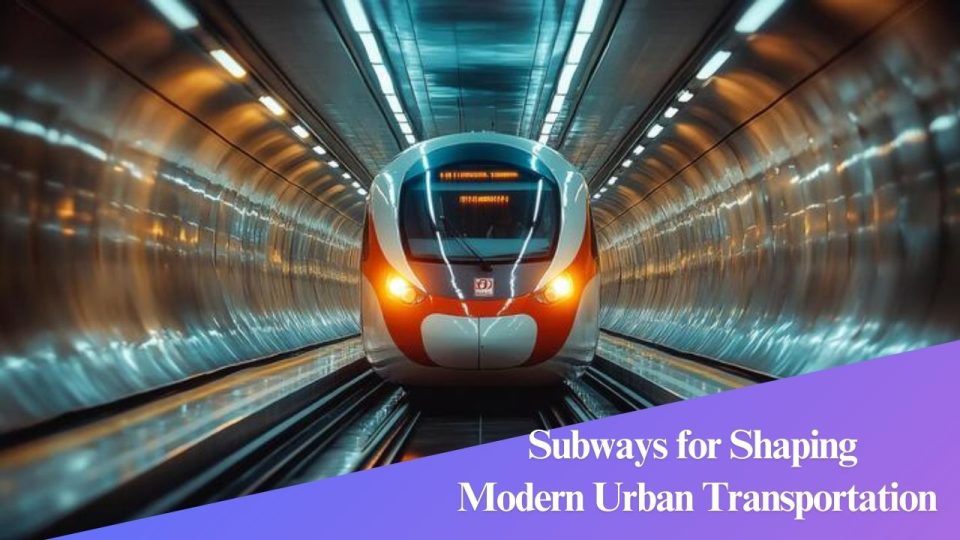
Subways for Shaping Modern Urban Transportation
The subway has become one of the most transformative components of urban transportation, enabling cities to move millions of people daily with efficiency, speed, and reduced environmental impact. Unlike road-based systems that struggle with congestion, subways operate underground or on dedicated tracks, providing a reliable solution for urban mobility in densely populated areas. The advantages of subways include reduced travel times, decreased reliance on private cars, lower air pollution, and greater land-use efficiency in cities. However, they also present disadvantages such as high construction and maintenance costs, noise and vibration issues due to train movement, and significant energy consumption in older systems. One technical challenge is the shaking caused by subway trains, which stems from vibrations transmitted through tracks, tunnels, and surrounding soils. Engineers mitigate these effects using advanced damping systems, resilient trackbeds, and improved tunnel linings. Subways are also designed with dual uses in mind—many networks can serve as emergency shelters during natural disasters or wartime, highlighting their role beyond transportation. Successful cities such as Tokyo, London, and New York showcase the potential of subways to transform urban life. Tokyo’s metro integrates precision, punctuality, and advanced technology; London pioneered underground travel and continues to expand its network; and New York demonstrates the massive scale of moving millions daily through a vast system. Modern subway development relies on cutting-edge technologies, including tunnel boring machines, digital control systems, and automated operations. Future innovations point toward greener, quieter, and fully autonomous subways, integrated seamlessly with smart city planning. In sum, subways remain indispensable to urban life, balancing their costs with immense social, environmental, and economic benefits, while technological advancements continue to enhance their sustainability and efficiency.
