Paper Title: Optimization of small submersible pressure hull based on MOGA
Authors: Xiaoyu Liu, Aldrin D Calderon, Xiangyao Wu
Corresponding Author: Xiaoyu Liu (yanqi1015@126.com)/Philippines
Abstract
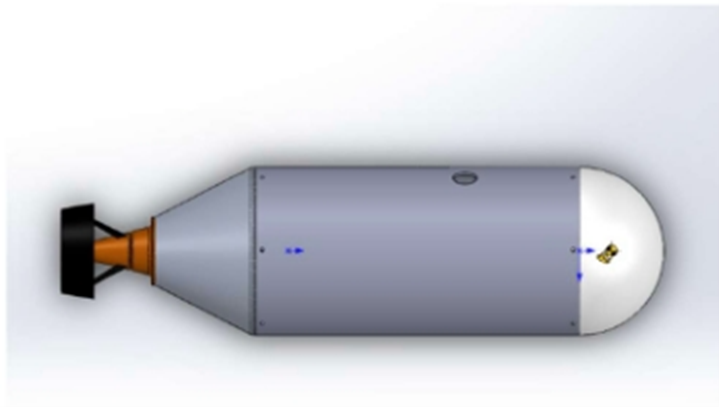
This study presents the structural optimization of a small-scale Autonomous Underwater Vehicle (AUV) designed for shallow-water marine aquaculture applications, such as monitoring water quality and the living conditions of farmed species. A cylindrical pressure hull model was developed using ANSYS Workbench and analyzed under a constant pressure of 0.5 MPa. Latin Hypercube Sampling (LHS) and Multi-Objective Genetic Algorithm (MOGA) were employed to optimize three key design variables: shell thickness, inner radius, and length. The final optimized design resulted in a 54.78% reduction in hull mass, a 25.25% decrease in maximum deformation, and maintained stress levels well below the allowable limit of 328 MPa. The optimization process significantly enhanced the AUV’s structural efficiency, safety, and agility, offering valuable insights for the design of lightweight submersible structures in practical environments.
Keywords
Finite element analysis, Optimization, Moga algorithms
